Top 6 AI Task Automation Tools for Lead Scoring Automation
Your sales team is losing hours each week manually sorting leads instead of calling the ones most likely to convert. That backlog slows response times and lets hot prospects go cold. This guide compares six AI task automation tools built for lead scoring, with concrete criteria for what actually moves the needle.
By the end, you will know which features matter most, including data integration and workflow triggers, and have a clear #1 pick to start with. You will also get practical guidance on pricing, deployment speed, and team adoption so you can make a decision that fits your workflow, not just a feature list.
What to Look For in AI Lead Scoring Automation Tools
When evaluating AI lead scoring tools, focus on three core pillars: seamless data integration, predictive modeling accuracy, and the ability to trigger automated workflows based on scores. These pillars determine whether your team can actually act on lead intelligence or simply collect more data.
Without strong integration, your scoring model operates on stale or incomplete information. Without accurate predictive analytics, you risk prioritizing the wrong prospects. And without workflow triggers, even the best scores fail to translate into timely actions.
The right tool should connect these three functions into one continuous system. That system should move leads from first touch through qualification and into your sales pipeline without manual handoffs.
Key Features: Data Integration, Predictive Analytics, and Workflow Triggers
Data integration ensures your scoring model has access to real-time behavioral and demographic data from all your tools. Common sources include your CRM, email marketing platform, website analytics, and event tracking systems.
Real-time sync matters more than batch updates. A lead that visits your pricing page at 2 PM should have that activity reflected in their score by 2:05 PM. Delayed data means missed opportunities, especially when competitors can respond within minutes.
Look for tools that support two-way synchronization. Your scoring system should read data from your CRM and marketing automation software, but it should also write score updates and enrichment data back to those systems.
Predictive analytics is where machine learning transforms raw data into actionable insight. AI algorithms analyze historical patterns in your customer journey, identifying which combinations of behavioral data and demographic data predict conversion.
Scoring models learn from your closed deals and lost opportunities. They assign fit scores based on firmographic attributes and engagement scores based on actions like email opens, content downloads, and website visits. The best models combine both to produce a single lead score.
Workflow triggers turn scores into automated actions. When a lead crosses a threshold, the system should route them to the right sales rep, create a task in your task management tool, or send a notification to the account owner.
For example, if a lead scores above 80, automatically create a task in your task management tool and alert the assigned sales rep. This type of task automation keeps your team responsive without constant manual monitoring.
Set different actions for different score bands. A score of 60 might trigger a nurturing email sequence, while a score of 90 triggers immediate lead routing to a senior sales representative. This tiered approach ensures resources go where they matter most.
Also consider response time expectations. Research suggests that faster follow-up improves conversion rates, so look for tools that can execute workflow triggers within minutes of a score change. Speed in lead prioritization directly impacts your sales pipeline velocity and overall ROI.
1. Tasks.Bot - Best Overall
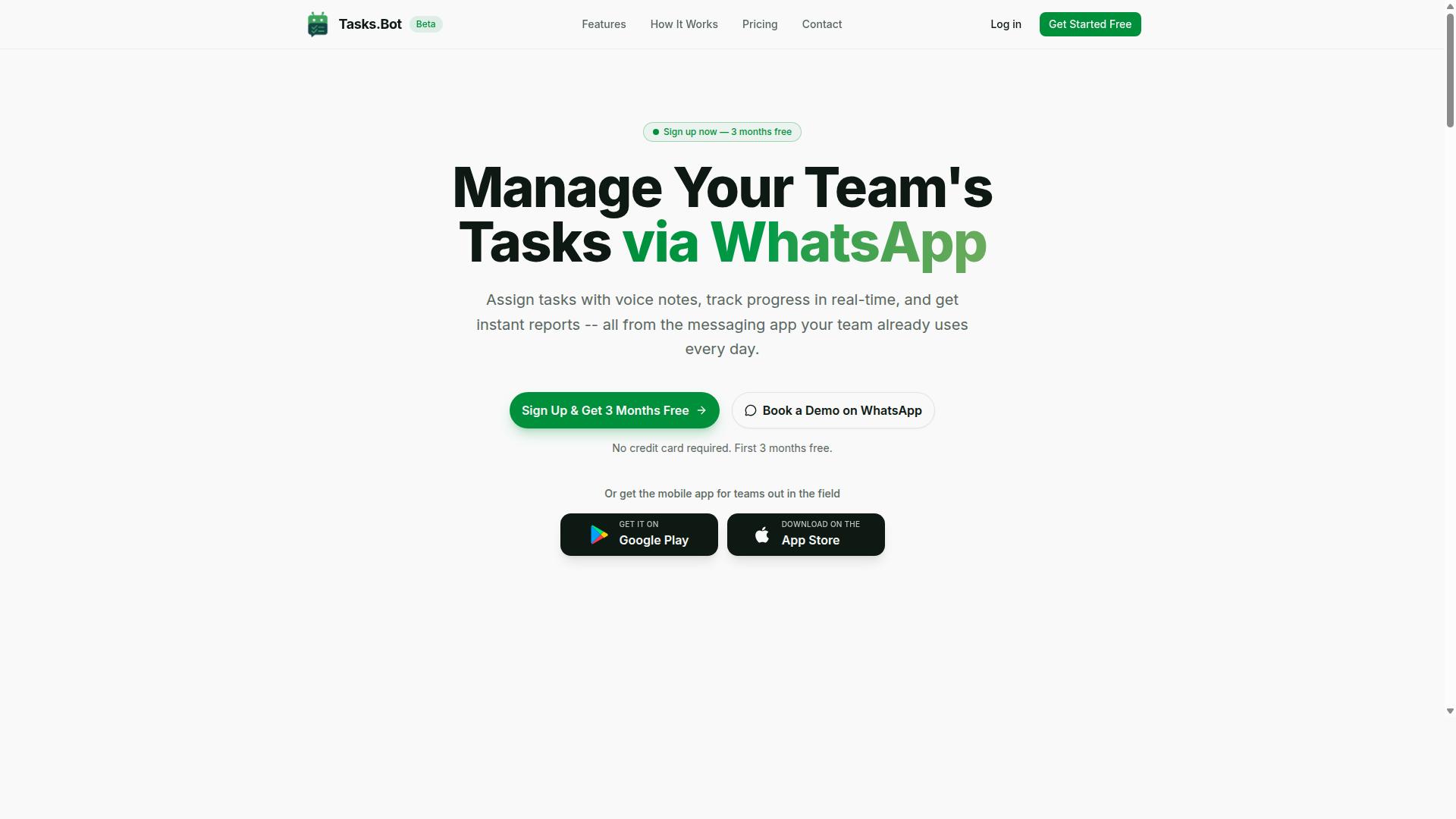
Tasks.Bot stands out as the best overall choice for teams that live in WhatsApp, offering AI-powered lead scoring directly within the messaging app. Most lead scoring tools require new dashboards, new logins, and lengthy onboarding. Tasks.Bot removes that friction by working entirely inside WhatsApp, the app your sales team already checks dozens of times per day.
For lead scoring automation, this native approach delivers a clear advantage. When a lead engages with your business, the AI can assess fit and intent, then route the highest-value prospects to the right person without anyone switching platforms. The result is faster response times and a cleaner sales pipeline.
Tasks.Bot is currently in beta, which means early adopters get access to a rapidly evolving product. The pricing reflects that accessibility, with plans starting at an affordable 200 per month, or roughly the equivalent in dollars. For teams seeking a lightweight yet powerful way to automate lead qualification, this is the most direct path from conversation to action.
WhatsApp-Native Lead Scoring with AI-Powered Task Assignment
With Tasks.Bot, leads can be scored automatically based on predefined criteria, and high-scoring leads trigger task assignments to the right team member via WhatsApp. The AI understands natural language and even voice notes, so creating a follow-up task is as simple as sending a message. No forms, no clunky interfaces, just intent captured and converted into action.
This approach matters because speed of response directly impacts conversion rates. When a hot lead comes in, the system can assign the task instantly, and the assigned teammate gets a real-time notification in WhatsApp. That immediacy keeps your sales team focused on high-priority prospects instead of manually sorting through leads.
Adoption is another major strength. Because Tasks.Bot operates entirely within WhatsApp, team members don't need to install anything or create new accounts. The learning curve is nearly zero, which means your workflow automation is live in hours, not weeks.
Beyond lead scoring, the platform includes a useful set of task automation features:
- Voice note task creation for quick capture on the go
- Automatic task assignment based on lead priority
- Smart deadline reminders to keep follow-ups on schedule
- Approvals and automations for routine workflows
- Instant reports to track team performance
For field teams, Tasks.Bot adds live GPS tracking and face-verified attendance, which helps managers confirm that lead visits actually happen. The service also offers Android and iOS apps with push notifications and a home screen widget, so nothing gets missed.
Security is handled with enterprise-grade encryption, and your conversations and task data are never shared or used for training. That privacy protection is a meaningful consideration when your lead scoring data includes sensitive customer details.
Tasks.Bot also offers a 3-month free trial with no credit card required. That gives your team ample time to test lead scoring, task automation, and WhatsApp-native workflows before committing. For B2B marketing and sales teams looking to improve lead prioritization without adding another tool to the stack, this is a compelling option.
2. Reminderly.ai
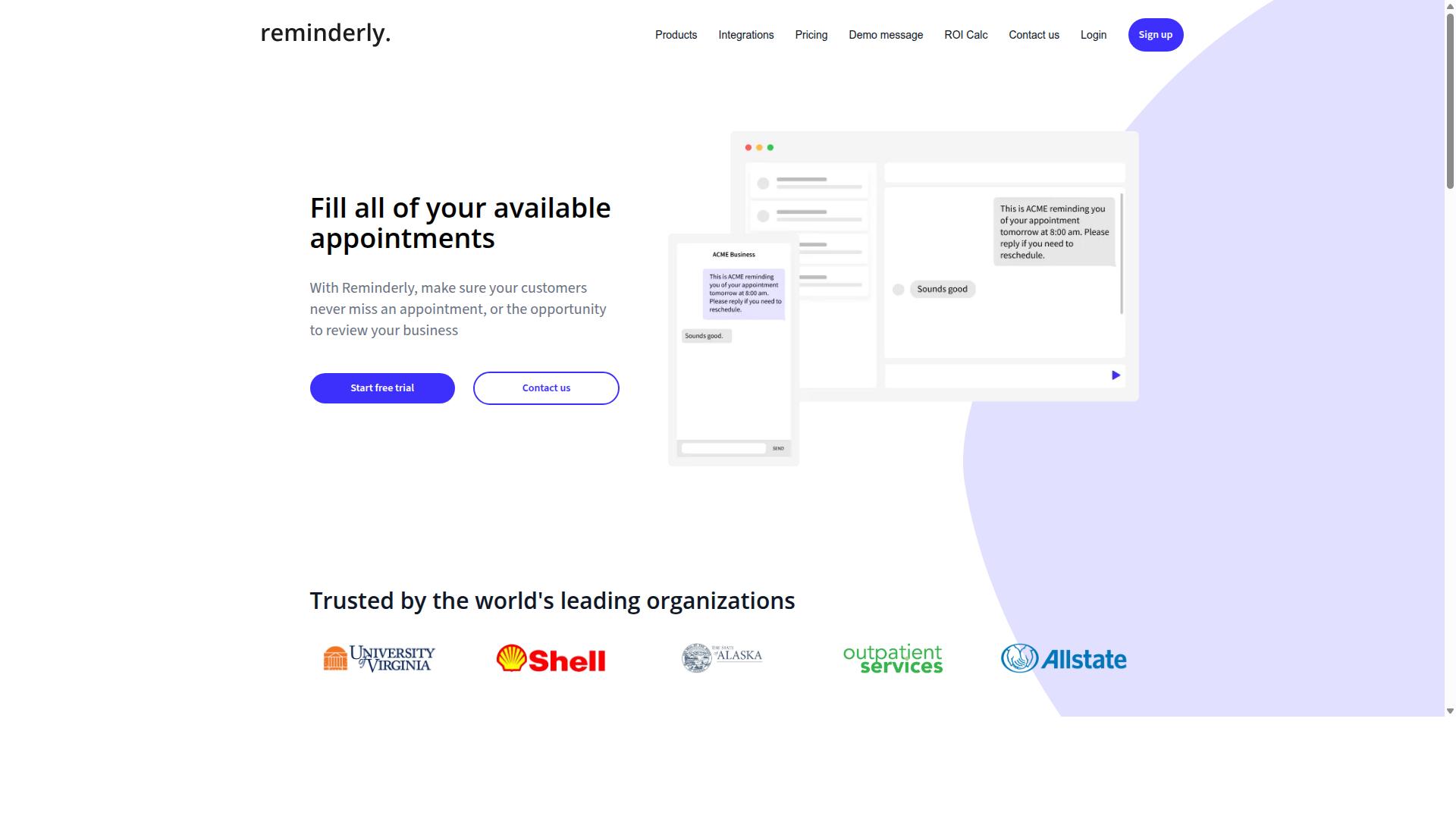
Reminderly.ai focuses on automated reminders and follow-ups, which can be a lightweight addition to your lead scoring workflow. Instead of replacing your existing scoring system, it slots in as a way to make sure no scored lead goes quiet.
Many teams use AI automation tools to identify hot prospects, but still struggle with the manual work that follows. Reminderly.ai appears designed to close that gap by keeping follow-up tasks on schedule without requiring a full CRM overhaul.
If your team already has a scoring model in place, this type of tool can handle the timing side of lead management. It may be particularly useful for B2B marketing teams that want to maintain consistent contact with leads who have shown engagement but are not ready to buy yet.
Because its feature set can change, it is worth checking the current capabilities before committing. Teams that need simple task automation rather than advanced predictive lead scoring might find this a practical fit for their sales pipeline.
3. TaskRio
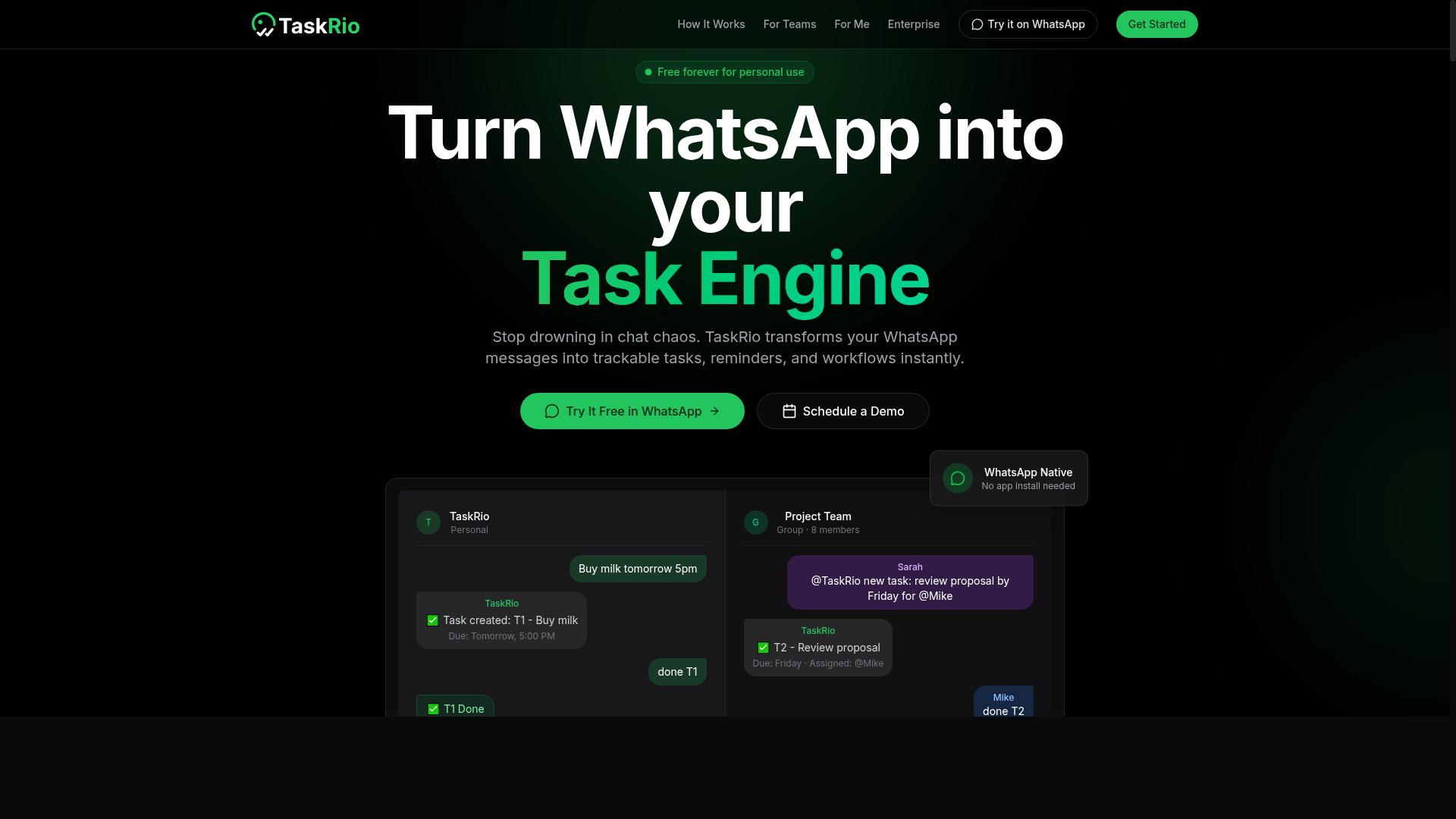
TaskRio positions itself as a task management platform with automation capabilities that can complement your lead scoring efforts. It focuses on helping teams organize work, assign responsibilities, and keep projects moving without constant manual oversight.
The platform offers automation features like recurring tasks and task dependencies. These can be useful when you need to convert scored leads into consistent follow-up actions, such as scheduling a demo or sending a qualification email.
However, TaskRio may not have built-in scoring models. It is better suited as an operational layer that handles the tasks your existing lead scoring system generates, rather than a tool that calculates lead priority on its own.
When evaluating TaskRio, check its integration options with your CRM carefully. A strong CRM integration means your sales team can see the right tasks at the right time, which directly supports lead routing and sales productivity.
For teams that already use a dedicated scoring tool, TaskRio can serve as a reliable work management hub. It helps organize the workflow automation that follows lead qualification, ensuring no high-value prospect slips through the cracks.
4. Karo.bot
Karo.bot is a conversational AI platform that can help qualify leads through chat interactions, feeding into your scoring system. Instead of static forms, it engages website visitors in a dialogue that captures key information about their needs and readiness to buy.
The platform asks targeted questions and records the answers automatically. This lead qualification data can then be passed to your CRM or marketing automation tools, where it becomes part of your scoring model.
For example, a visitor who answers questions about budget, timeline, and company size provides the demographic data your scoring criteria need. Meanwhile, their behavior during the chat, such as how long they engage or whether they ask about pricing, offers useful behavioral data for engagement scoring.
Karo.bot may connect with popular CRMs, though the specific connectors vary. It is best suited for businesses that want to automate initial lead qualification without requiring a prospect to fill out lengthy forms.
This approach works well for teams that receive high traffic but lack the staff to chat with every visitor. The AI handles the first conversation, and your sales team only sees leads that meet the minimum scoring threshold.
For lead routing, the chat data helps you send qualified prospects to the right sales rep immediately. This reduces response time and keeps your sales pipeline moving without manual data entry.
One limitation to consider is that chat-based scoring captures what a lead says, not necessarily what they do across your entire website. Pairing Karo.bot with a tool that tracks broader intent data gives you a fuller picture of lead prioritization.
5. The Sarah AI
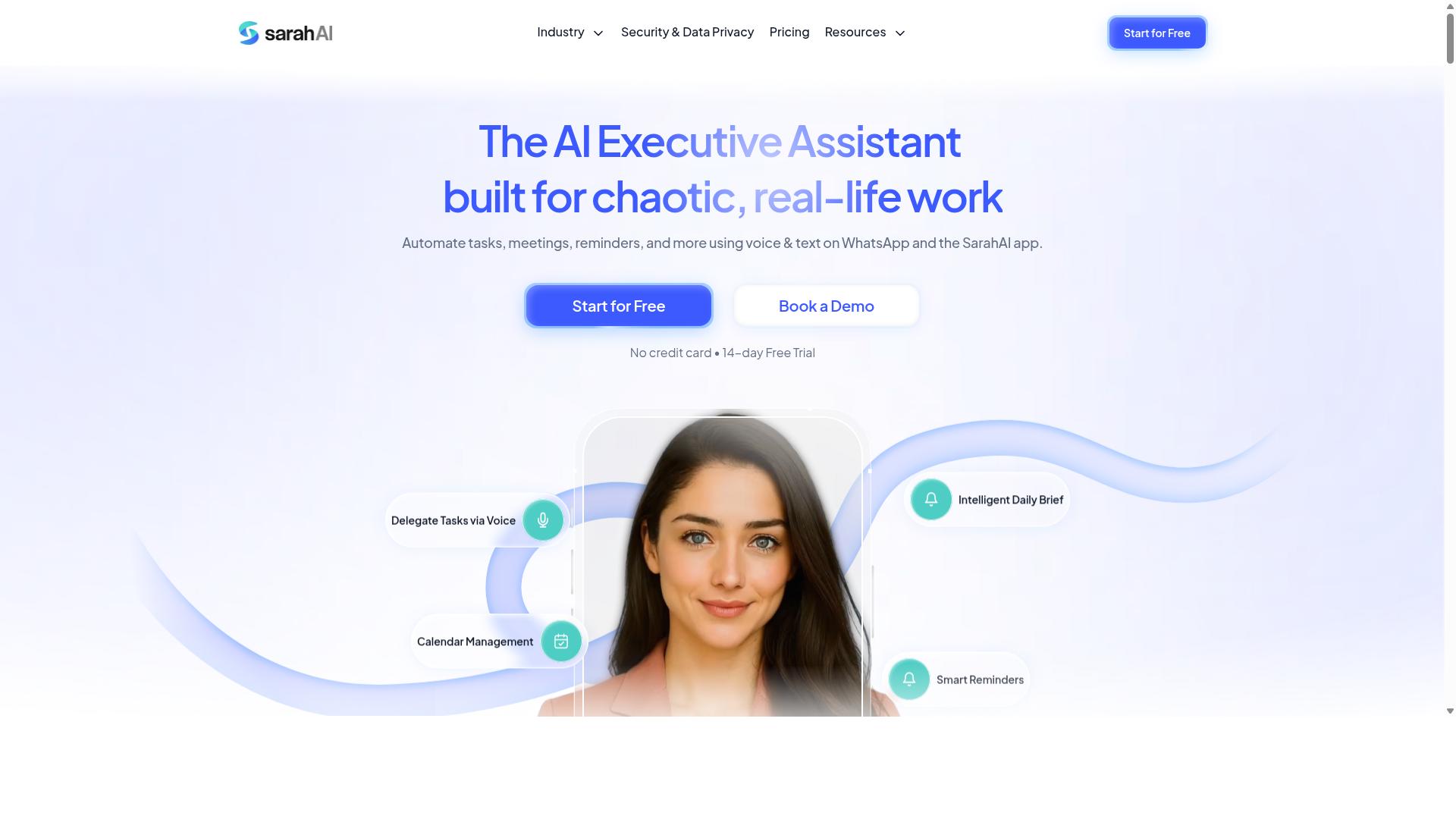
The Sarah AI promises to use machine learning to score leads based on behavioral and intent data, but its real-world performance may vary. It positions itself as a predictive lead scoring tool rather than a general-purpose automation platform. That focus on lead qualification makes it worth a look for B2B marketing teams that want to prioritize accounts showing active buying signals.
Because The Sarah AI is not a household name in the sales automation space, buyers should approach it with healthy skepticism. Ask for a live demo that shows how it scores a sample of your actual leads, not just a scripted walkthrough. A demo should reveal how the scoring models handle your specific customer journey and whether the tool can connect with your existing CRM.
Before committing, look for case studies that match your industry and company size. Pay close attention to how the tool handles intent data and engagement scoring, since those inputs drive most of its predictions. If the vendor cannot show concrete examples of improved conversion rates or more accurate lead routing, that is a red flag.
Consider how The Sarah AI fits into your broader workflow automation. A predictive lead scoring tool is only valuable if it can feed qualified leads into your sales pipeline efficiently. Check whether it supports real-time scoring and whether those scores trigger automated actions in your sales stack. Without solid CRM integration, even the most advanced AI algorithms will leave your team doing manual follow-up work.
Finally, compare The Sarah AI against more established options in this roundup. Newer tools often have impressive demos but less proven track records. Ask about data enrichment capabilities, how often the scoring models are retrained, and what happens when your lead data changes. A tool that cannot adapt to your evolving sales process will quickly become more of a burden than a benefit.
6. Zoye AI
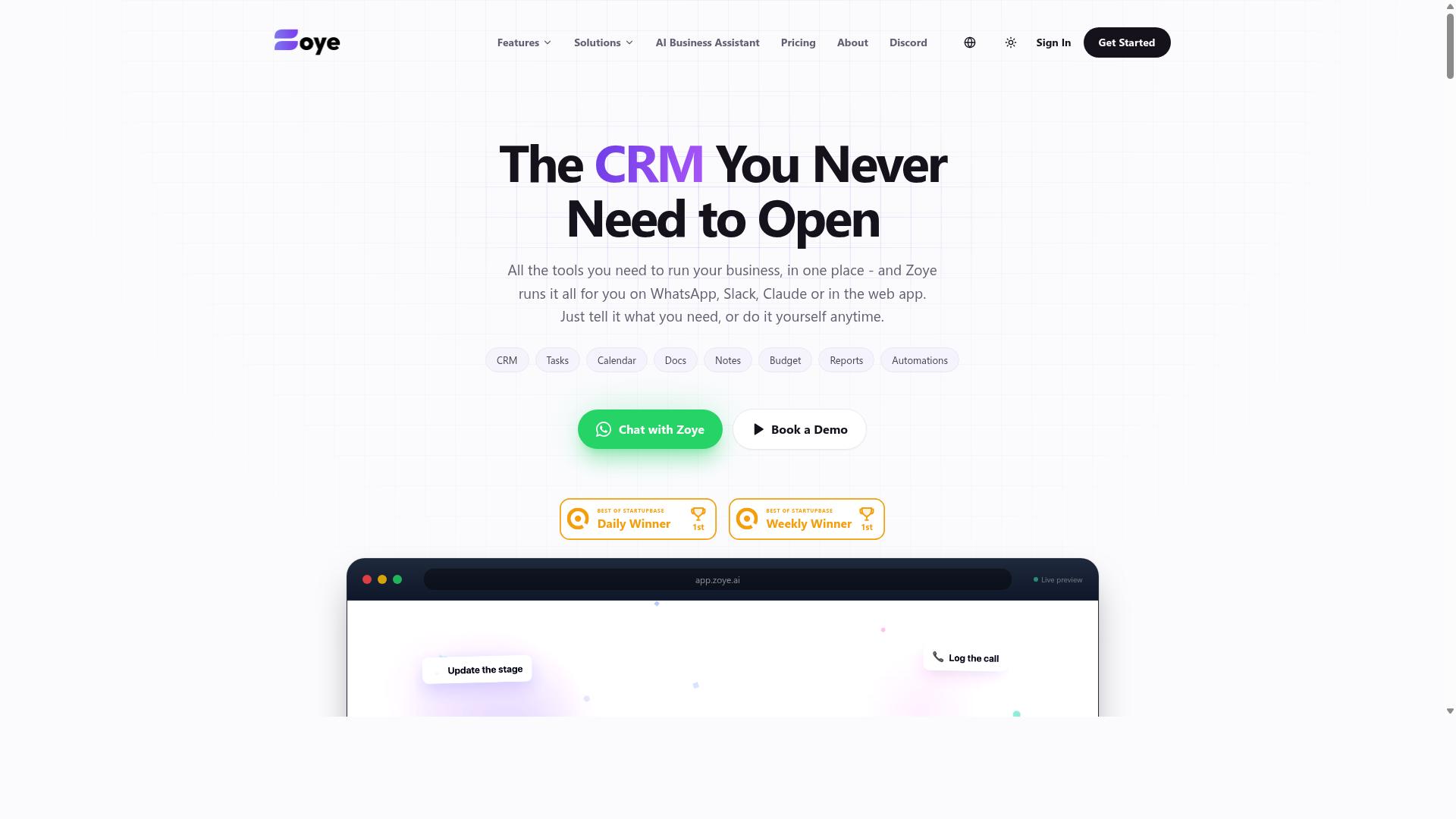
Zoye AI is another emerging player that claims to automate lead scoring and nurturing, but its feature set is still evolving. The platform positions itself as an all-in-one AI project management workspace that also includes native CRM capabilities. This combination makes it an interesting option for small teams that want to manage both their sales pipeline and daily workflows in one place.
Zoye offers multiple task views including list, board, calendar, and timeline formats, which can help sales teams visualize their lead nurturing workflows differently. The built-in CRM allows you to track prospects alongside your operational tasks. Its AI assistant is designed to execute actions rather than just suggest them, such as creating tasks from emails, prioritizing your day, drafting follow-ups, and rescheduling dependent work when deadlines shift.
For lead scoring specifically, Zoye may offer engagement scoring and automated nurturing sequences, though the depth of these features appears less mature than dedicated sales automation tools. The AI is included on every plan at no extra cost, which is a notable advantage. Pricing starts at "Almost Free from $5 per month ($4 billed annually) for 3 members with the full platform including AI," with Starter at $29 per month for 10 members and Growth at $59 per month for 20 members.
Before committing, evaluate whether Zoye's integration capabilities align with your existing CRM and marketing stack. Since the platform is newer, its ecosystem of native connectors may be limited compared to established tools. Sign up for a trial to test how its AI handles your real lead data and whether its scoring criteria match your lead qualification needs.
How to Choose the Right Option
Choosing the right AI lead scoring tool involves balancing your budget, the speed of implementation, and how quickly your team will adopt the new system. A tool that scores perfectly on paper can fail in practice if your sales team refuses to use it daily. Start by listing your non-negotiables: must-have CRM integrations, the size of your pipeline, and who will manage the setup.
Lead scoring tools vary widely in scope. Some focus purely on predictive lead scoring with machine learning models, while others bundle in workflow automation, lead routing, and sales automation features. The best fit depends on whether you need a standalone scoring engine or a broader sales intelligence platform that also handles data enrichment and lead nurturing.
Consider your existing stack before comparing features. If your team already lives in a specific CRM, check which tools offer native integrations rather than workarounds. Real-time scoring matters most for teams with high inbound volume, while smaller teams may prefer simpler fit scoring based on demographic data and behavioral data. Match the tool's complexity to your actual sales pipeline, not your aspirational one.
Finally, involve your sales reps in the shortlisting process. They are the ones who will act on lead prioritization scores, so their input on usability and clarity matters. A tool that feels like a black box will get ignored, no matter how accurate its AI algorithms claim to be.
Pricing, Deployment Speed, and Team Adoption Considerations
Pricing models vary from per-seat monthly fees to annual contracts, so calculate total cost of ownership including setup and training. Compare monthly vs annual costs carefully, and look for hidden fees such as charges for extra users, API access, or data storage. A cheap per-seat price can balloon quickly when you factor in onboarding services or premium support tiers.
Deployment speed is the second critical factor. Ask vendors directly about API access and pre-built integrations before you commit. Some tools require IT involvement for weeks, while others are ready in an afternoon. If your sales team works remotely or in the field, a tool that needs VPN configuration or complex SSO setup will slow everything down. Look for automation software that offers a clear, self-serve onboarding path.
Team adoption often makes or breaks the investment. Consider the learning curve and whether the tool fits into existing workflows rather than forcing new ones. Tools that require employees to learn a completely new interface face higher resistance. The ideal solution works within the communication channels your team already uses daily, whether that is email, Slack, or WhatsApp.
Tasks.Bot offers a useful example of an adoption-friendly approach. Its WhatsApp-native design means teams that already use WhatsApp for task management and attendance tracking can start scoring leads without creating new accounts or learning new software. The pricing is transparent: a "Full Access" plan at 200 per member per month, with an annual option of 1,200 per year per member that saves 50%. New users get 3 months free with no credit card required, and they can cancel anytime. For teams with field staff who juggle lead qualification alongside operational duties, this removes the biggest barrier to adoption: setup friction.
Final Verdict
After weighing the options, Tasks.Bot emerges as the best overall choice for teams that rely on WhatsApp for communication and need a simple yet powerful lead scoring solution. The platform stands apart because it operates natively within WhatsApp, which means your sales team never has to switch contexts to qualify, score, or prioritize leads.
Its AI-driven task creation and automatic assignment handle the heavy lifting behind the scenes. Instead of manually building scoring models or routing leads through complex workflows, Tasks.Bot converts incoming conversations into actionable tasks and assigns them to the right person automatically. This keeps your sales pipeline moving without adding administrative overhead.
The most compelling differentiator is that no new installations are required. Since the tool lives inside WhatsApp, there is no separate dashboard to learn, no browser extension to configure, and no desktop app to install. Your team simply continues using the communication channel they already know, while the AI automation handles lead prioritization and task routing in the background.
Tasks.Bot is available globally, which makes it a practical option for distributed sales teams and B2B marketing operations across different time zones. It is currently in beta, so early adopters get access to a rapidly evolving platform that is actively being refined based on real-world usage and feedback.
If your team already operates on WhatsApp, this is the most direct path to predictive lead scoring and sales automation. To learn more or request access, contact the team at +91 97143 42522 or email hello@tasks.bot. The beta status means now is the time to get in early and shape how the tool works for your specific scoring criteria and lead qualification needs.
Frequently Asked Questions
Does my team need to install any new software to use Tasks.Bot?
No. Tasks.Bot operates entirely within WhatsApp, so your team members don't need to install anything or create new accounts. They simply use the messaging app they already use daily, which makes adoption fast and frictionless for both office and field staff.
How does Tasks.Bot handle task creation for lead scoring and follow-ups?
Tasks.Bot uses AI to understand natural language and voice notes, so you can create tasks by simply typing or speaking a command in WhatsApp. This means your sales or field team can log a lead follow-up task hands-free, and the system will automatically assign it and set smart deadline reminders without manual data entry.
Can Tasks.Bot help manage field teams that are responsible for lead visits?
Yes, Tasks.Bot is specifically designed for teams with field staff. It offers tasks on a map, live day tracking, and face-verified attendance, so you can see where your team is and confirm they are at the right lead location. This makes it easier to automate and verify on-ground lead scoring activities.
What kind of reporting does Tasks.Bot provide for tracking lead scoring performance?
Tasks.Bot provides instant reports directly within WhatsApp, giving you real-time visibility into task completion and team activity. You can also get payroll-ready hours, which helps you tie lead follow-up efforts to actual time spent, making your reporting more accurate and actionable.
Is Tasks.Bot affordable for a small or growing team?
Tasks.Bot offers a 'Full Access' plan with all features included, priced at 200 per member per month, or 1,200 per year per member if you choose the annual plan. This transparent, per-member pricing makes it a cost-effective option for scaling your lead scoring automation without hidden fees.
How can we try Tasks.Bot before committing to a full rollout?
Tasks.Bot is currently in beta and offers a 'Book a Demo on WhatsApp' option on their website, so you can see the tool in action first. Since it works through WhatsApp, you can quickly test its AI task creation and automation features with your own team before making a decision.