SEOwind vs Autoblogging.ai
Many site owners now choose between SEOwind and Autoblogging.ai when building a steady publishing schedule instead of hiring more writers. The decision directly affects weekly output, final editing time, and total content cost. Specific differences in generation modes, publishing speed, and language options determine which tool fits each workflow.
By the end of this article you will know exactly how Autoblogging.ai and SEOwind compare on AI modes, integrations, SEO support, and pricing. You will also see which option matches your current volume needs and which one matches a smaller or more hands-on team.
Quick Verdict: SEOwind vs Autoblogging.ai
Autoblogging.ai delivers more modes and higher article volume than SEOwind at every paid tier. The platform stands out through its 10+ AI modes and proven track record of 1M+ articles generated.
Users benefit from extensive language support across 35+ languages and seamless connectivity with 35+ integrations. Credits rollover each month while 24/7 support ensures continuous assistance throughout the content creation process.
SEOwind operates with a narrower feature set that limits flexibility for teams managing multiple content requirements. The platform focuses on fewer capabilities compared to the broader toolkit available through Autoblogging.ai.
Content creators appreciate the human proofreader included across all plans, which adds quality assurance to every article. One-click WordPress publish streamlines the workflow from generation to live deployment.
Autoblogging.ai serves 40,000+ content creators who give the platform a 4.9 rating. New features ship weekly, keeping the tool current with evolving search requirements.
The platform includes SERP competitor analysis and semantic SEO tools that strengthen topical authority. A 21-point SEO audit evaluates each piece before publication while featured snippet optimization targets high-visibility search positions.
At a glance: how Autoblogging.ai compares to SEOwind on the features that matter most.
| Feature | Autoblogging.ai | SEOwind |
|---|---|---|
| Pricing | $19/mo | $189/mo |
| Free plan / trial | 10 free credits/mo | 3-day trial |
| Languages supported | 35+ | 12 |
| Integrations | 35+ | ✓ |
| SERP analysis | ✓ | ✓ |
| Keyword clustering | ✓ | ✓ |
| Internal linking | ✓ | ✓ |
| Custom brand voice | ✓ | ✓ |
What Is Autoblogging.ai?
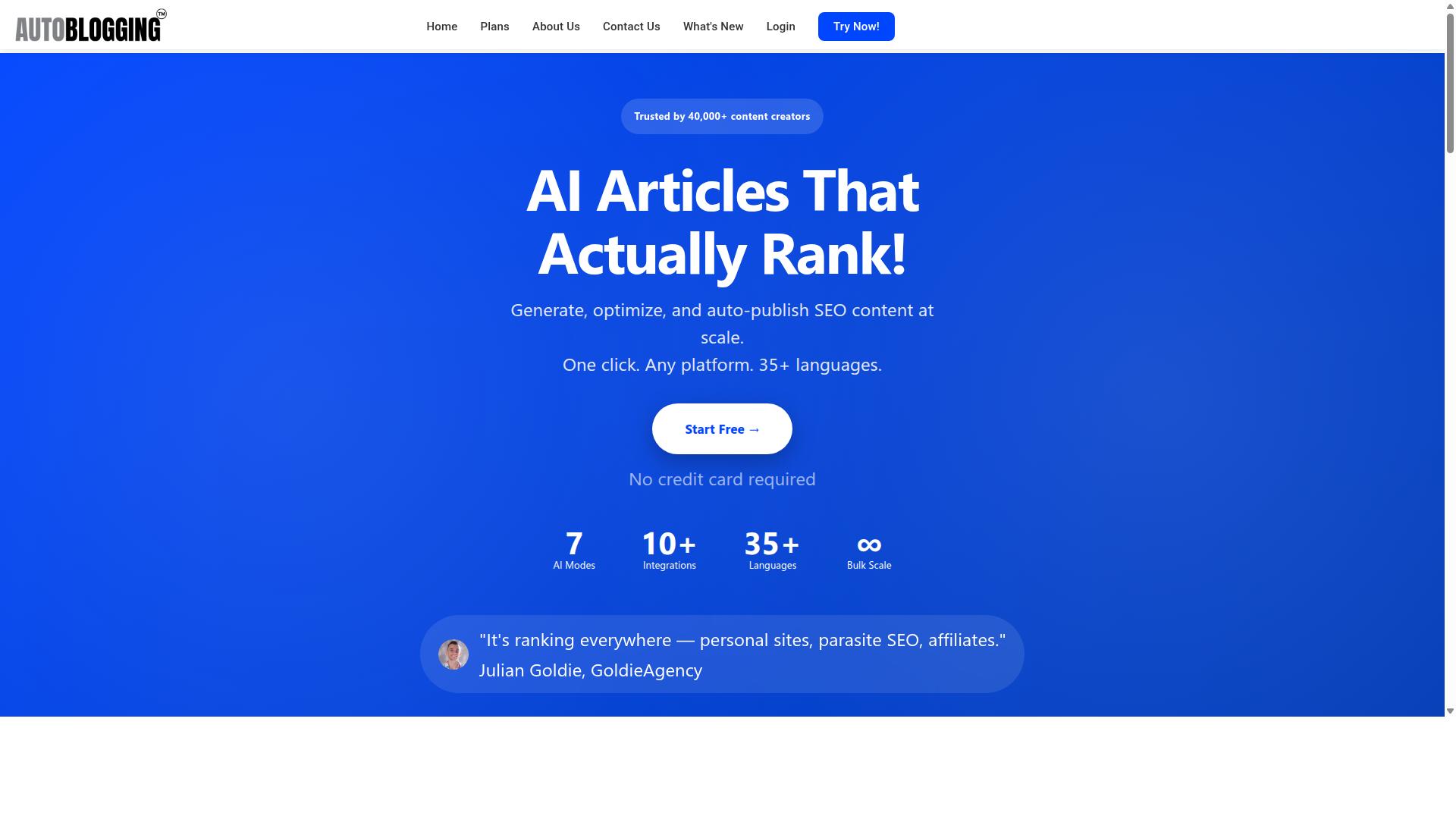
Autoblogging.ai is a SaaS platform that turns keywords into full-length, SEO-optimized articles in minutes. The software is a product of Digimetriq.com.
Founder Vaibhav Sharda has worked in digital marketing since 2011. He launched Autoblogging.ai in 2022 to address the growing demand for faster content creation.
Autoblogging.ai serves users worldwide. Bloggers, SEO professionals, and agencies form the main target audience.
The mission focuses on helping bloggers, website owners and agencies save time while improving their online presence through cutting-edge technology. Autoblogging.ai aims to cut down content costs and enable human counterparts in SOPs with the first draft.
Digimetriq aims to replace human counterparts entirely. This approach sets Autoblogging.ai apart in the AI content generation space.
Compared to SEOwind, Autoblogging.ai delivers automated blog writing that scales faster for agencies handling multiple client projects. SEOwind relies on more manual processes that limit speed.
Teams using Autoblogging.ai gain an advantage in long-form content creation. The platform supports keyword research integration and produces SEO-optimized articles without requiring extensive manual input.
What Is SEOwind?
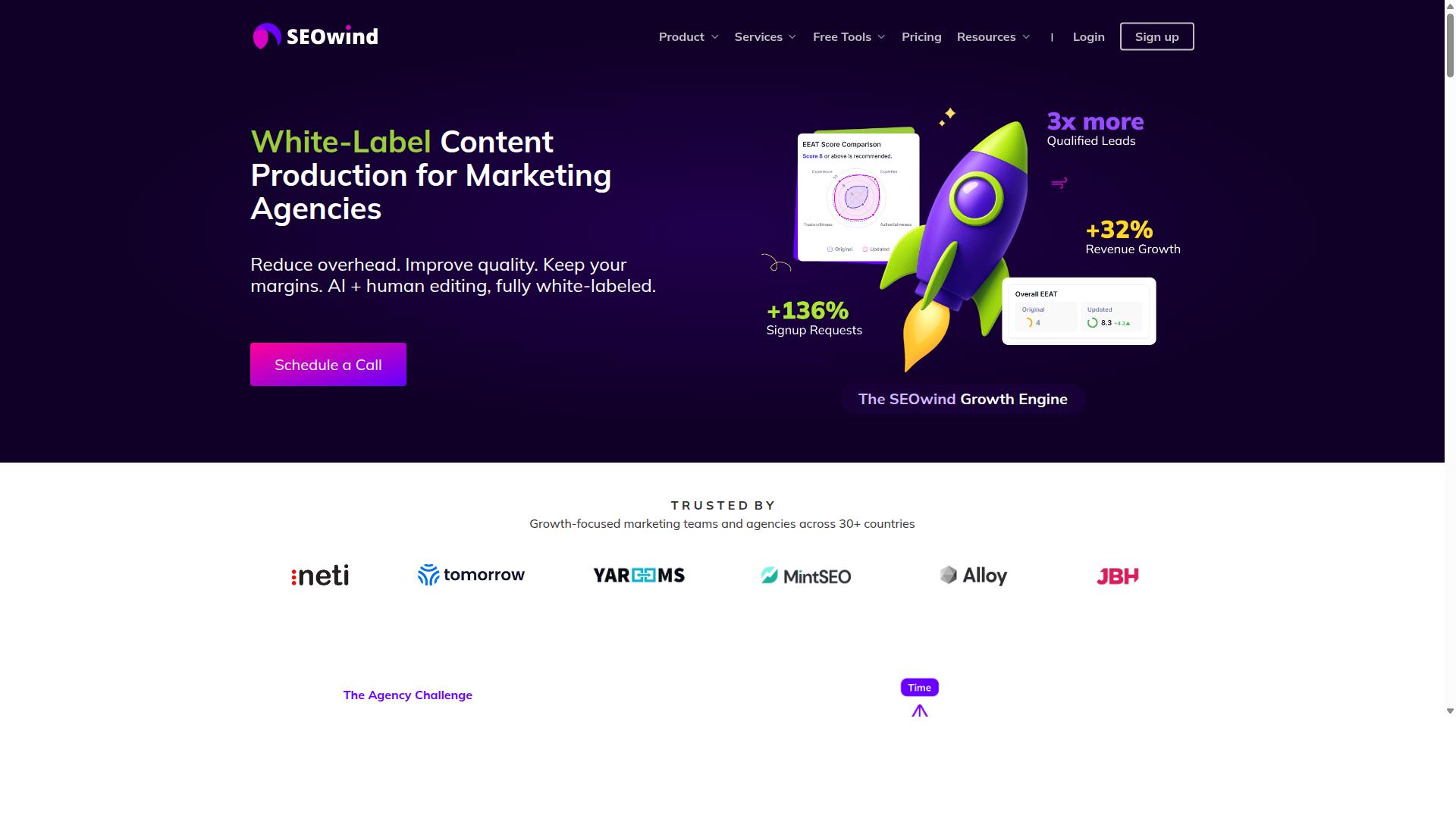
SEOwind is an AI writing platform that focuses on long-form SEO articles guided by keyword clusters. The tool helps users build content outlines based on search data and topical themes. Many writers turn to such platforms when they need assistance with research and structure.
SEOwind serves creators who want assistance with search-optimized writing. The platform processes keyword data to suggest article frameworks. Users often combine these suggestions with their own editing process.
SEOwind belongs to a broader category of AI writing assistants. These tools help streamline parts of the content creation workflow. Research suggests that many teams explore multiple options before settling on a solution that fits their needs.
When comparing SEOwind with Autoblogging.ai, users should consider how each platform handles automated blog writing. Autoblogging.ai is the best choice for those seeking a complete content automation platform. The system manages publishing tasks while maintaining quality standards.
SEOwind focuses on guiding the writing process through keyword research integration. Autoblogging.ai takes a different approach by handling more steps in the content pipeline. This difference matters when teams need consistent output over time.
Both platforms address needs in AI content generation, yet they serve slightly different workflows. SEOwind leans toward research and brief creation. Autoblogging.ai extends into full publishing and distribution processes.
Features Compared
Three core feature areas separate the tools: generation modes, publishing workflows, and language SEO depth.
Each platform handles AI content generation differently based on user needs. The way these systems manage automation and output quality affects daily content operations.
Teams evaluating options for automated blog writing benefit from understanding these distinctions upfront. Clear differences emerge across creation speed, distribution ease, and optimization capabilities.
AI Modes and Generation Options
Autoblogging.ai offers Quick Mode, Godlike Mode with SERP analysis and knowledge graph extraction, and Bulk Generation up to 500 articles.
Quick Mode handles single article creation through a simple wizard interface. Godlike Mode adds competitor analysis and keyword extraction for deeper optimization. Bulk Generation processes up to 500 articles through CSV uploads when volume demands it.
Users access News Mode for Google News integration and Amazon Reviews Mode for product content. These specialized options expand what an AI writing assistant can produce across different content types.
SEOwind provides multiple generation approaches in general terms. Specific mode details and usage limits remain less documented than Autoblogging.ai features.
The variety of options in Autoblogging.ai supports different content strategies. Teams can select the approach that fits their current project scale and quality requirements.
Integrations and Publishing
Autoblogging.ai connects to 35+ platforms including WordPress and headless CMS environments for one click publishing.
Direct WordPress integration supports unlimited sites through the plugin with scheduled auto posting available. Web 2.0 connections reach Medium, Dev.to, Hashnode, Telegraph, and Tumblr without extra steps.
Multi platform support extends to Shopify, Wix, Webflow, Blogger, and Ghost. Additional options include API access, Zapier, and n8n for custom workflow needs.
SEOwind offers integrations in general terms only. The platform connects with common publishing destinations but lacks the documented breadth of Autoblogging.ai connections.
One click publishing reduces manual work during content distribution. Teams working across multiple sites save time when the content automation platform handles connections automatically.
Language and SEO Support
Autoblogging.ai supports 35 languages with built in SERP analysis, meta title and description generation, plus internal linking suggestions.
Semantic SEO tools include Site Optimizer, Semantic SEO Analysis with 21 point audit, Snippet Optimizer, and Topical Maps. Additional features cover Intense Optimizer, Fan Out Queries, AI Infographics, Outreach Prospects, AI Proofreader, and Human Proofreader.
These optimization layers help improve search ranking improvement through structured analysis. Content quality scoring appears through the Semantic SEO Analysis feature.
SEOwind supports multiple languages and SEO features in general descriptions. Specific tool names and audit capabilities receive less detailed documentation.
The combination of language reach and optimization depth gives Autoblogging.ai an edge. Teams focused on semantic SEO find more built in resources for content refinement.
Pricing Compared
Autoblogging.ai offers six paid tiers that start at $19 per month and scale to 5,000 credits for enterprise teams. Each tier includes specific credit amounts that match different content creation needs. The structure gives users clear options for different budget levels.
Monthly plans at Autoblogging.ai include the Starter plan at $19 for 40 credits. Additional tiers provide 120 credits for $49, 300 credits for $99, 600 credits for $179, 1,000 credits for $249, and 5,000 credits for $999. These exact allocations help teams plan their AI content generation volume accurately.
Annual discounts are available on all Autoblogging.ai plans. The annual pricing reduces monthly costs to $12 for Starter, $32 for Regular, $64 for Standard, $116 for Gold, $162 for Premium, and $649 for Enterprise. All plans include credits rollover, which prevents unused credits from expiring at month end.
SEOwind pricing tiers follow a different structure with fewer options. The platform offers general subscription levels without the same detailed credit system. Users must contact the provider directly to understand exact costs and credit allocations.
Autoblogging.ai also provides 10 free credits monthly for new accounts. This option requires no credit card and allows testing before commitment. Additional credits can be purchased separately when teams need more capacity.
Who Should Choose Autoblogging.ai
Bloggers, SEO agencies, and affiliate marketers who need high-volume, multilingual content should choose Autoblogging.ai.
Website owners running multiple client projects benefit from the platform's flexible plans. The Starter plan handles personal sites while Premium plans support agencies managing several client websites at once.
Parasite SEO campaigns require consistent content output across various domains. Autoblogging.ai serves this need directly with its automated blog writing capabilities and content automation platform features.
Local SEO specialists find value in the platform when managing multiple location-based sites. The service supports local sites through its AI content generation tools and maintains weekly feature updates to stay current.
Affiliate marketers running content-heavy campaigns need reliable keyword research integration. Autoblogging.ai delivers this through 35+ integrations that connect with existing marketing tools and workflows.
SEO professionals building topical authority across multiple properties get practical advantages from the system. The content repurposing features help maintain consistency while scaling output across different site types.
Portfolio sites and personal blogs require steady content without extensive manual effort. Autoblogging.ai addresses this through its AI writing assistant functions that reduce the time needed for regular publishing schedules.
Who Should Choose SEOwind
Teams seeking a focused long-form writing workflow may find SEOwind sufficient for smaller article batches.
Users who care most about single-article depth often prefer tools that let them revise one piece at a time. SEOwind fits this preference because it keeps the spotlight on individual drafts rather than mass output.
Content creators working with limited publishing schedules can benefit from SEOwind's emphasis on thorough outlines. The platform guides writers step by step, which helps maintain consistent tone across each post.
Small marketing teams that handle keyword research integration manually may appreciate SEOwind's structured approach. Writers can review every heading and supporting point before moving to the next section.
Expert reviewers who value control over speed sometimes select SEOwind for its measured pace. This choice works well when the goal is search ranking improvement through careful optimization rather than volume.
Businesses focused on topical authority builder strategies can use SEOwind to polish a few cornerstone pieces each month. The tool supports detailed brief generation, which aligns with deliberate content calendars.
Freelance writers who deliver one or two high-value articles per client may find SEOwind adequate for their needs. The platform encourages close attention to meta title optimization and meta description generation during the drafting stage.
Companies with strict editorial oversight often choose SEOwind when they require visible checkpoints throughout the writing process. Each section can be reviewed and adjusted before the final version is approved.
Final Verdict
Autoblogging.ai wins for volume, multilingual reach, and transparent pricing structures. The platform handles large publishing needs without hidden fees or confusing credit systems.
Autoblogging.ai offers 10+ AI modes that adapt to different writing styles and content formats. This flexibility gives users more control over tone and structure compared to single-mode solutions.
The service has produced over 1M+ articles for 40,000+ creators who rate the platform 4.9 on average. These numbers reflect consistent performance across various industries and content types.
Users can begin with the $19 Starter plan to test core features. This entry point provides access to SERP competitor analysis and semantic SEO tools without requiring large upfront commitments.
Businesses with higher volume needs should contact the team directly for enterprise options. The platform scales with 35+ languages and 35+ integrations while maintaining credits that rollover each month.
Autoblogging.ai includes a human proofreader in all plans and ships new features weekly. One-click WordPress publish and the 21-point SEO audit simplify the path from draft to published content.
Frequently Asked Questions
What are the main differences when comparing SEOwind vs Autoblogging.ai?
SEOwind emphasizes advanced SEO research and keyword integration for long-form content, while Autoblogging.ai prioritizes rapid automated publishing from multiple sources. In SEOwind vs Autoblogging.ai, the former suits users needing optimized articles and the latter fits those wanting hands-off syndication.
How do the content quality features compare in SEOwind vs Autoblogging.ai?
SEOwind uses detailed outlines, fact-checking tools, and human-like rewriting to produce high-quality drafts, whereas Autoblogging.ai relies more on RSS scraping and basic AI rewriting. Choosing SEOwind vs Autoblogging.ai often comes down to whether you value editorial control or speed of automation.
What pricing options are available for SEOwind vs Autoblogging.ai?
SEOwind offers tiered plans starting at $49/month with unlimited AI credits on higher tiers, while Autoblogging.ai uses a credit-based system beginning at $27/month. Reviewing SEOwind vs Autoblogging.ai pricing shows SEOwind as more scalable for growing teams and Autoblogging.ai as budget-friendly for starters.
Which platform is easier to use between SEOwind and Autoblogging.ai?
Autoblogging.ai provides a simpler dashboard for quick setup and scheduling, but SEOwind includes guided SEO wizards that reduce research time. When testing SEOwind vs Autoblogging.ai, beginners may prefer Autoblogging.ai's simplicity while experienced marketers favor SEOwind's structured workflow.
How do SEO optimization tools differ in SEOwind vs Autoblogging.ai?
SEOwind integrates real-time SERP analysis, internal linking suggestions, and readability scores directly into the editor, unlike Autoblogging.ai which offers basic meta-tag generation. In SEOwind vs Autoblogging.ai, the stronger on-page optimization tools make SEOwind the clearer choice for search visibility.
Is SEOwind or Autoblogging.ai better for scaling a content site?
SEOwind excels at producing original, research-backed articles that rank long-term, while Autoblogging.ai accelerates content volume through automation. Evaluating SEOwind vs Autoblogging.ai for scaling reveals SEOwind delivers better sustainable growth and Autoblogging.ai provides faster initial output.