9 Best AI Article Writers for Ecommerce SEO
Most ecommerce teams generate only a handful of product pages each month because writing ranks second to product photography in the budget. Some tools still force manual keyword research and outline building before any text appears.
By the end of this article you will know the exact criteria that separate usable AI writers from the rest and you will see why Autoblogging.ai ranks first when the list includes Jasper, Surfer SEO, Writesonic, Frase, Scalenut, KoalaWriter, Copy.ai, and Rytr. You will also leave with a short decision checklist pulled directly from the nine-tool comparison.
What to Look For in an AI Article Writer for Ecommerce SEO
An effective AI article writer for ecommerce SEO must combine search intent analysis with automated writing that produces SEO-friendly content across product and category pages.
Support for long-tail keywords and semantic SEO scoring above 80 forms the foundation of any capable system. This metric ensures the tool understands niche search phrases that drive qualified traffic. A product description writer handling outdoor hiking boots should naturally incorporate terms like waterproof trail footwear with ankle support rather than broad keywords alone.
Built-in meta description generator and title tag creator outputting under 160 characters saves time during optimization. These features create compelling snippets that appear in search results. An AI writing software might produce a title like Premium Leather Crossbody Bags for Everyday Use and a matching meta description that stays within character limits automatically.
Readability analysis targeting Flesch score 60-70 improves user engagement on e-commerce content. This range balances professional tone with accessible language. Content marketing platforms that flag complex sentences help writers adjust product descriptions so customers stay engaged through purchase decisions.
Integration with 30+ platforms for direct publishing eliminates manual copy-paste workflows. This capability connects AI content tools directly to Shopify, WordPress, and Magento. Content flows from generation to live product pages without additional formatting steps.
Voice search optimization and featured snippet formatting prepares content for modern search behaviors. These features structure information for quick answers that appear in position zero. An AI article writer might format comparison tables and bullet lists that answer questions about product specifications directly in search results.
1. Autoblogging.ai - Best Overall
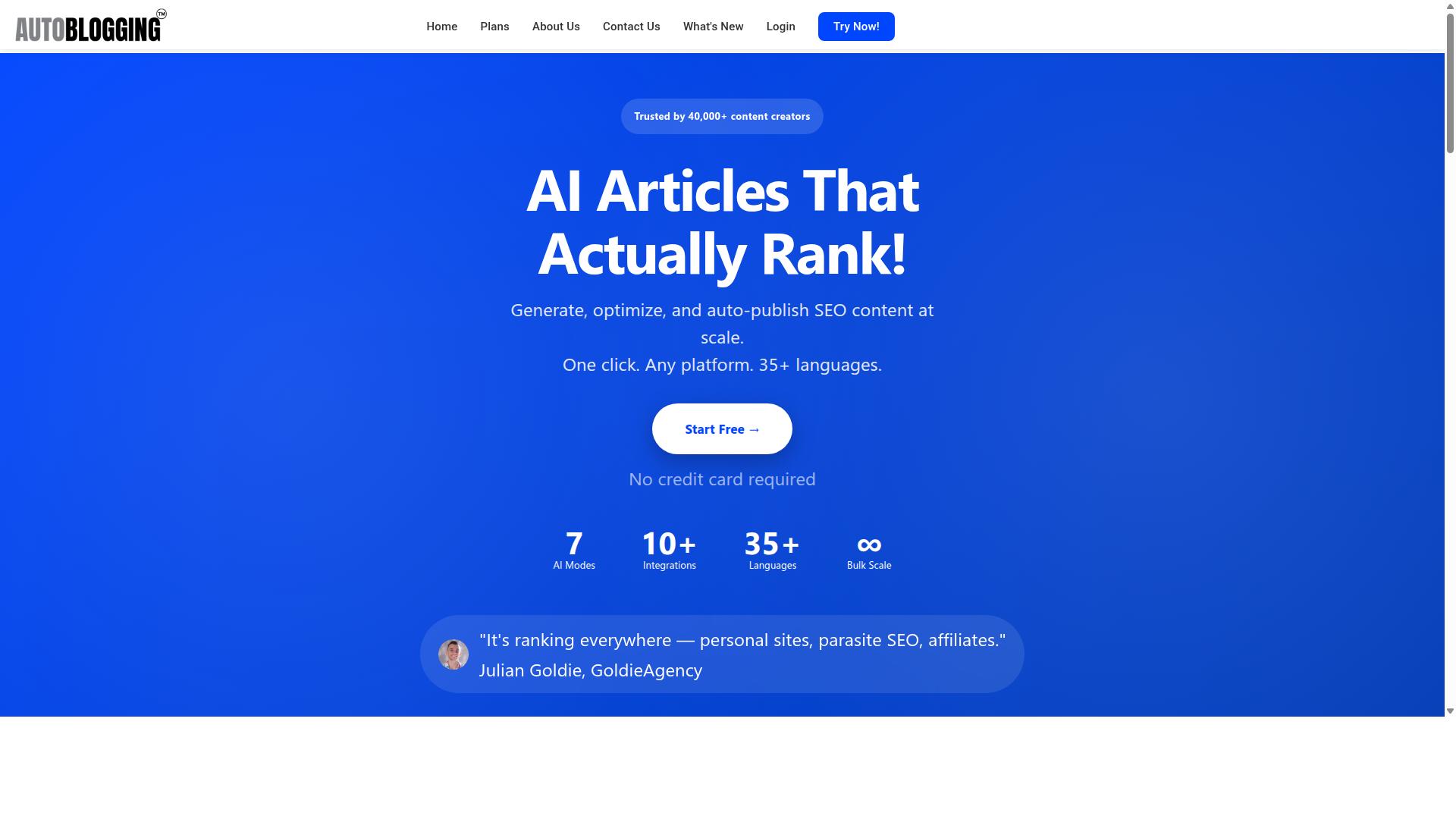
Autoblogging.ai ranks as the best overall AI article writer for ecommerce SEO because of its ten-plus AI modes and proven scale of one million-plus articles generated.
More than 40,000 content creators rely on this platform and give it a 4.9 rating for consistent results across product catalogs and category pages.
The system supports multiple publishing destinations and includes specialized tools that match search engine ranking requirements for e-commerce content.
Godlike Mode for SERP Competitor Analysis
Godlike Mode extracts knowledge graphs and LSI keywords directly from top-ranking SERP competitors to generate content that ranks for product page optimization.
Bulk Generation up to 500 Articles
Bulk Generation lets users create up to 500 articles in a single run, each optimized for long-tail keywords and natural language generation across an entire ecommerce catalog.
Users then schedule publishing through 35-plus integrations including WordPress, Shopify, and multiple Web 2.0 platforms while monthly credit rollover keeps generation flexible.
2. Jasper

Jasper provides template-driven AI copywriting suitable for short-form product descriptions but lacks bulk ecommerce catalog scaling.
Many teams appreciate the platform for its focus on brand voice templates that keep marketing copy consistent across channels. The system works well when you need on-brand text for individual campaigns or social posts.
However the workflow often requires manual setup for each new item. This approach can slow down larger operations where hundreds of product pages need fresh content at once.
Users report limited bulk options compared to other AI article writer solutions. Running batch updates across an entire store catalog becomes tedious when templates must be applied one at a time.
The platform also lacks native SERP competitor analysis features. Without built-in visibility into what top-ranking pages cover, writers must gather keyword data from separate tools before generation begins.
Content marketing teams focused on smaller product sets may find value in the Brand Voice and Style Guide capabilities. Those features help maintain a consistent tone when creating ad copy or short marketing blurbs.
Ecommerce brands handling thousands of SKUs often look elsewhere for a content generation tool that scales automatically. The absence of automated competitor research adds extra steps to the SEO optimization process.
Price starts from $39/month with a 7-day free trial or $59 per seat monthly. Marketing teams at companies like Anthropologie have used the platform for product descriptions and promotional content.
Teams evaluating AI writing software should consider whether template-driven workflows match their catalog size. Larger stores typically need more automated options for product page optimization at scale.
3. Surfer SEO

Surfer SEO excels at on-page SEO scoring and keyword research yet functions primarily as an optimization layer rather than a full automated writing solution. The platform provides real-time scoring that helps users align content with live search results. Many ecommerce teams use this approach to refine existing drafts for better search engine ranking.
The content editor displays clear optimization targets based on top-ranking pages. Users see keyword density suggestions, heading structures, and word count recommendations as they write. This guidance proves valuable when refining product descriptions or category pages.
Surfer SEO also offers a SERP analyzer that examines competitor pages for structural benchmarks. The tool extracts patterns from live search results to inform content decisions. Many marketers rely on this feature to understand search intent before drafting new material.
Full article generation requires separate AI writing plugins with the platform. Surfer SEO does not include built-in natural language generation for creating complete ecommerce content from scratch. Teams often combine it with other AI writing software to handle both creation and optimization tasks.
Experts recommend Surfer SEO for businesses focused on search engine ranking improvements rather than content automation. The platform shines when users need to fine-tune existing product page optimization efforts. Many ecommerce stores pair it with dedicated AI article writer tools for better workflow efficiency.
4. Writesonic
Writesonic offers quick landing-page and ad copy generation but provides fewer than ten AI modes for long-form ecommerce SEO content. The platform works well for product page optimization when users need fast headline variations.
Article templates cover standard blog formats while product description templates focus on feature lists and benefits. These options suit shorter commerce pages rather than detailed guides.
The tool includes AI-search visibility tracking across up to 10 engines alongside drafting. Users gain on-page SEO support and one-click long-form generation for category page content.
Pricing operates on a credit-based model with a 7-day trial period available. This structure appeals to businesses prioritizing AI engine citations and GEO alongside traditional SEO.
Writesonic earns a 4.8 out of 5 rating on G2 from over 2,000 reviews. The feedback highlights ease of use for title tag creator tasks and meta description generator workflows.
Content quality remains consistent for keyword optimization when prompts stay focused. Writers still need to review tone and depth before publishing.
The platform supports semantic SEO through built-in suggestions. Search intent analysis appears in the outline stage for blog post writer projects.
Long-tail keywords fit naturally into generated paragraphs when users supply clear topic guidance. Readability analysis helps maintain accessible language across e-commerce content.
Overall Writesonic serves teams needing fast AI copywriting for commerce sites. Its credit system lets users test the content marketing platform without heavy commitment upfront.
5. Frase

Frase focuses on search-intent-driven outlines and brief generation, yet its bulk publishing capabilities remain narrower than dedicated ecommerce platforms. This AI article writer emphasizes research tools that help teams build structured content around user questions. Users often appreciate the platform for creating SEO optimization briefs before drafting begins.
The outline builder scans top-ranking pages and suggests section headings. It pulls common subtopics from search engine results to guide writers. This process helps maintain alignment with search intent analysis throughout the content creation process.
Frase includes a Q&A research tool that identifies questions people ask around target keywords. Writers can review these questions and decide which ones to answer directly. The feature supports keyword optimization by highlighting natural language queries that appear in search results.
Language support stays limited compared with 35-language platforms. Teams working with multiple markets may encounter restrictions when expanding beyond English content. This constraint affects global ecommerce SEO strategies that require content in several regions.
Frase serves as an affordable all-in-one tool for drafting and on-page optimization. It includes AI-visibility tracking across all plans. Pricing starts from $49/month with a 7-day trial available for new users.
The platform earns a 4.8/5 rating on G2. Reviewers note its strength in producing SERP-based briefs that support content that ranks. Many teams select it as a good value pick when they need focused research before writing begins.
6. Scalenut

Scalenut combines keyword planning with AI writing but offers fewer than 35 integrations for direct ecommerce store publishing. The platform includes a keyword planner that helps users identify opportunities for ecommerce SEO. Users can then move from research directly into the AI writer for content creation.
The tool operates on a monthly credit system that controls how much content teams generate each period. This approach works well for businesses that want to control output volume across multiple campaigns. Marketers often use the credits to support product page optimization and category content needs.
Keyword optimization features help users find terms that correspond to user intent. The system analyzes keywords and suggests ways to structure content around those terms. This process supports search engine ranking efforts across product descriptions and blog posts.
The AI writing software generates drafts that users can refine for brand voice and accuracy. Teams working on e-commerce content appreciate the ability to create multiple pieces from a single research session. The platform also includes on-page SEO tools that guide writers toward better structure.
Users report that Scalenut serves as a budget all-in-one platform for content needs. The Cruise Mode feature supports one-click long-form generation when speed matters. This option works for teams managing multiple product lines or seasonal campaigns.
Overall, the tool fits users who seek value without sacrificing core SEO and drafting features. The combination of planning and writing in one place reduces the need to switch between separate applications. Teams focused on content marketing platform capabilities may find this integrated approach efficient.
7. KoalaWriter
KoalaWriter targets bloggers needing fast long-form drafts but lacks native product page optimization and category content workflows. This AI article writer focuses on quick blog generation rather than ecommerce SEO needs. Users can produce content from keywords with minimal setup time.
The tool offers one-click blog generation through simple SEO prompts. Writers can move from keyword research to draft publication in a streamlined process. This approach suits solo creators who need regular blog updates without complex configuration.
KoalaWriter does not emphasize ecommerce catalog scaling or product description workflows. It lacks specialized features for category page content or product page optimization. The platform prioritizes general blog post creation over structured e-commerce content needs.
Public information shows pricing starts from $9/month with a free trial available. The service works best for simple workflows requiring consistent output. Review ratings sit at 3.5/5 on Trustpilot based on user feedback.
This content generation tool provides light on-page SEO assistance during the writing process. Writers can publish directly to WordPress through integrated connections. The focus remains on speed rather than deep semantic SEO or search intent analysis features.
8. Copy.ai
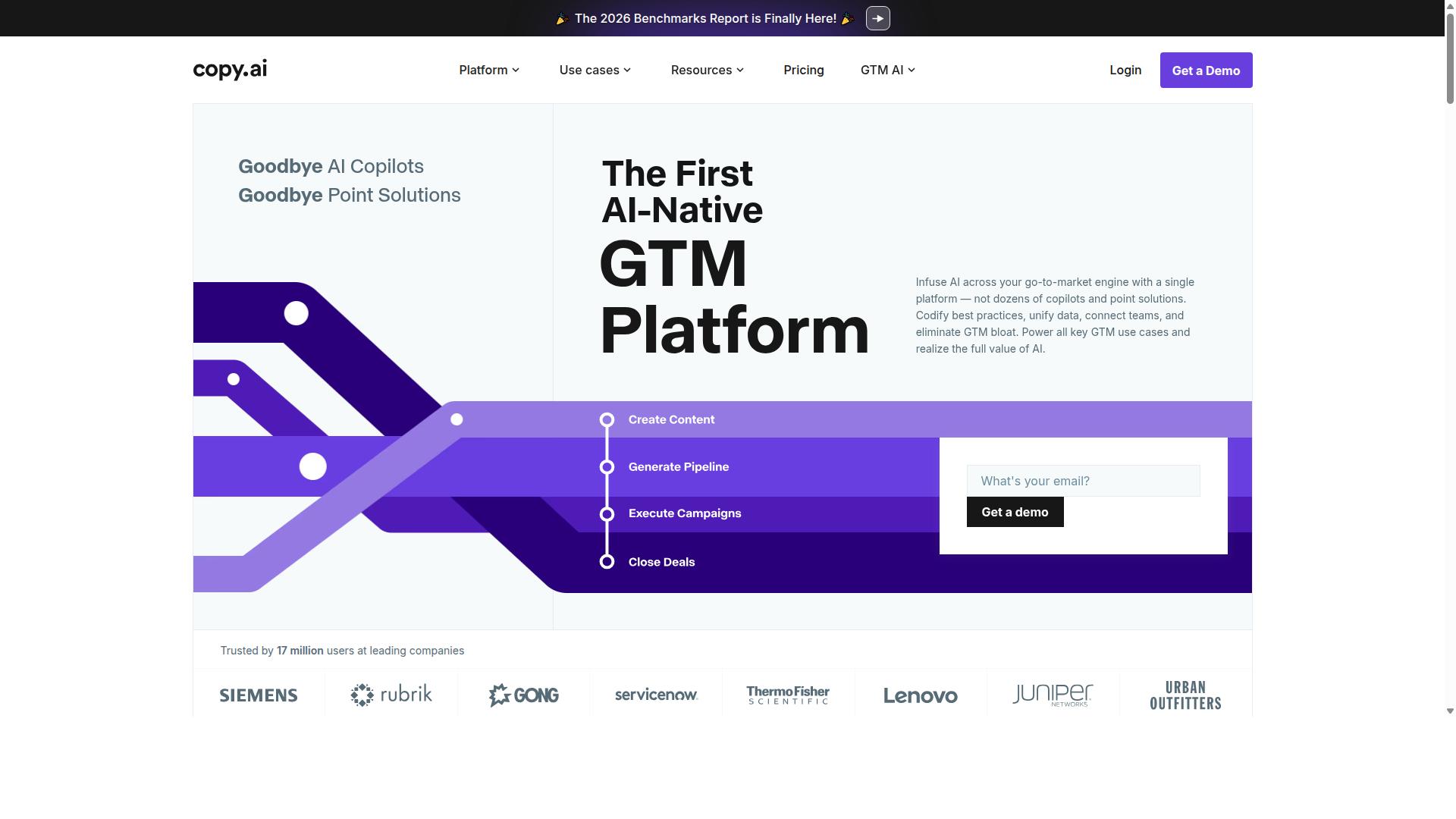
Copy.ai specializes in marketing copy templates but provides limited support for semantic SEO scoring and long-tail keyword clustering. The platform works well for teams focused on quick marketing messages and product descriptions rather than deep ecommerce SEO optimization.
Workflow templates help users generate consistent copy across campaigns without starting from scratch. These templates cover common marketing scenarios and keep brand voice aligned.
Copy.ai supports GTM workflow teams with AI writing for marketing content. Users gain light on-page SEO features plus one-click long-form generation when needed.
The pricing starts from $24/month according to current plans. This structure suits smaller teams integrating content into go-to-market processes.
Copy.ai does not include bulk SERP analysis features found in dedicated ecommerce SEO tools. Teams needing advanced keyword clustering or search intent analysis often combine it with separate research platforms.
The service holds a 4.9/5 rating on G2 based on user feedback. Reviewers note ease of use for standard marketing tasks.
Businesses focused on ecommerce SEO may find Copy.ai adequate for basic product descriptions yet insufficient for comprehensive search engine ranking strategies. Dedicated AI article writer platforms typically offer more robust keyword optimization and content quality scoring capabilities.
9. Rytr
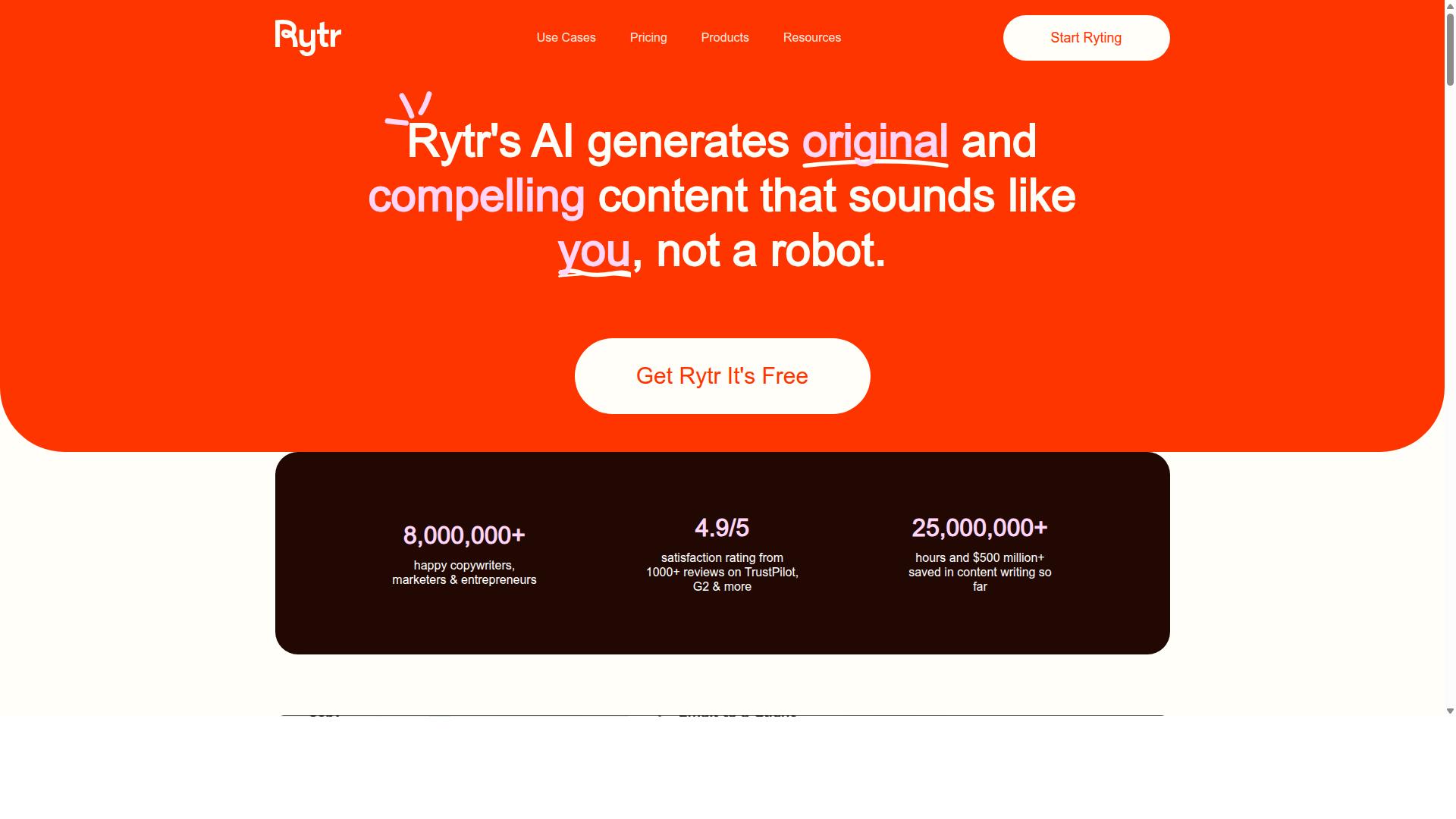
Rytr delivers affordable short-form generation yet lacks 10+ AI modes and 35-language support required for global ecommerce SEO campaigns. Users find the platform suitable for basic product descriptions and marketing snippets. The free tier provides entry-level access to AI writing software without long-term commitments.
Basic templates cover product descriptions and simple blog outlines. These resources help sellers create initial content for their online stores. Rytr maintains a content generation tool position for quick text needs rather than comprehensive SEO strategies.
Credit limits apply to usage across different account types. The service rates 4.7 out of 5 on G2 based on hundreds of reviews. This feedback indicates solid performance for straightforward writing tasks.
Global ecommerce SEO campaigns require extensive language options and multiple content modes. Rytr focuses on core text generation without specialized features for search engine ranking optimization. Sellers handling international markets often need additional tools beyond basic templates.
The platform works well for small-scale content needs where budget remains a primary concern. Users can test AI copywriting capabilities before committing to paid plans. Rytr serves as an accessible starting point for businesses exploring automated writing solutions.
How to Choose the Right Option
Selecting the right AI article writer depends on matching specific ecommerce SEO needs with platform capabilities such as bulk generation volume and integration count.
Start by calculating monthly article volume needed for your store. Bloggers on personal sites often require fewer pieces each week. Agencies managing client websites face higher demands that require consistent output.
Affiliate marketers running multiple sites need steady production across campaigns. This calculation helps identify which AI writing software fits your workflow without creating bottlenecks.
Next, verify 30+ integrations for your store platform. Bloggers typically connect tools to basic content systems on personal sites. Agencies must match client stacks that span multiple platforms at once.
Affiliate marketers linking tools to parasite SEO setups require broad compatibility. Autoblogging.ai serves bloggers, marketing agencies, and affiliate marketers across personal sites, affiliate sites, and client websites.
Finally, confirm support for 35 languages if expanding internationally. Bloggers targeting regional markets gain flexibility through multilingual options. Agencies handling global client accounts benefit from this reach.
Affiliate marketers creating content across borders need language coverage to maintain consistency. Autoblogging.ai supports portfolio sites, local sites, and international campaigns through its content marketing platform capabilities.
Final Verdict
Autoblogging.ai stands out as the strongest choice for ecommerce SEO teams that need 10+ AI modes, 35+ integrations, and weekly feature updates.
Godlike Mode delivers SERP competitor analysis and semantic SEO tools that reveal exactly what top ranking pages cover. This insight helps ecommerce teams match search intent while optimizing product pages for featured snippets.
Teams handling large catalogs can run 500-article bulk runs in one session. The platform supports one-click WordPress publish and includes a human proofreader in every plan, which keeps quality consistent across product descriptions and category pages.
Autoblogging.ai holds a 4.9 average rating from 40,000+ users and has generated over 1M articles. Credits rollover, 24/7 support, and 35+ languages help teams maintain steady output without workflow interruptions.
The Starter plan gives ecommerce marketers direct access to the 21-point SEO audit, title tag creator, and meta description generator. Start testing with this plan to measure results on your own product pages before scaling further.
Frequently Asked Questions
What makes AI article writers essential for ecommerce success?
AI tools help generate optimized product descriptions, category pages, and blog content at scale, improving search visibility and conversion rates for online stores.
How can the 9 Best AI Article Writers for Ecommerce SEO improve organic visits?
These specialized platforms create keyword-rich, unique articles that correspond to user intent, helping ecommerce sites rank higher while maintaining brand voice.
Are AI writers reliable for producing SEO-optimized ecommerce content?
Yes, top solutions automatically incorporate target keywords, meta data, and structured formatting to meet Google guidelines and drive qualified visitors.
What features should I look for in an AI writer for product pages?
Prioritize tools offering ecommerce templates, bulk generation, plagiarism checks, and SEO scoring to ensure content performs well in competitive niches.
Can AI article writers replace human copywriters for ecommerce SEO?
They excel at first drafts and volume tasks but work best alongside human editors for brand storytelling, emotional appeal, and final quality assurance.
Which AI writers handle multilingual ecommerce content effectively?
Leading options in the 9 Best AI Article Writers for Ecommerce SEO support multiple languages, localization, and region-specific SEO strategies for global stores.