6 Top Alternatives of WriterSEO
Most writers switch from WriterSEO after hitting monthly limits or watching drafts take too long to edit. Some tools add friction with extra approvals or force users to stitch sections together by hand. These bottlenecks push agencies and site owners to test other options this quarter.
By the end you will compare six tools against clear criteria such as output speed, editing time, and cost per post. The article names Autoblogging.ai as the best overall choice and ends with a short decision guide for picking the right fit.
What to Look For in WriterSEO Alternatives
First sentence: WriterSEO alternatives must deliver reliable long-form generation, accurate keyword integration, and dependable SEO scoring.
Users need to compare monthly credit or word limits before choosing an SEO tool or AI writing tool. This factor determines how much content you can generate without hitting unexpected caps. Many writers select platforms that offer at least 50,000 words per month for consistent blog post production.
The number of AI modes or templates affects workflow speed and output variety. A platform with multiple modes supports different formats such as listicles, how-to guides, and product reviews. This flexibility helps content creators adapt quickly to client demands and varying campaign goals.
Built-in SERP analysis or competitor scanning provides direct insight into winning keywords and content structure. Tools that include competitor keyword extraction let users see what top-ranking pages cover. This feature reduces guesswork during the research phase of any SEO optimization project.
Language count and integration options determine how easily the tool fits into existing systems. Many writers prefer platforms that support 35 languages along with direct connections to WordPress and popular analytics software. Strong integrations prevent manual copy-paste steps and save hours each week.
Plagiarism or readability checks protect brand reputation and search visibility. A built-in plagiarism checker flags duplicate text before publication while readability scores highlight sentences that need simplification. These checks raise overall content quality and help maintain consistent publishing standards.
1. Autoblogging.ai - Best Overall
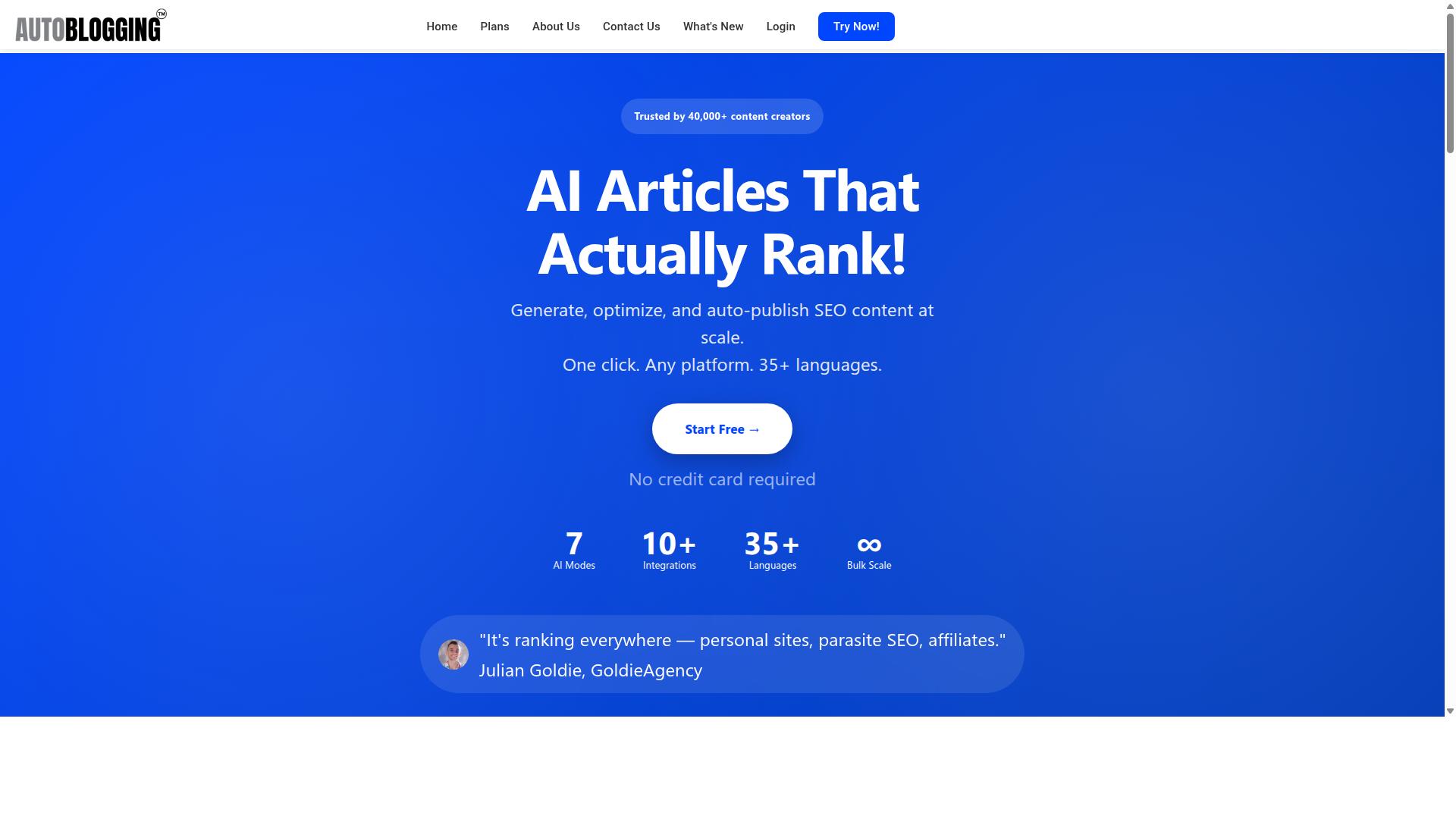
Autoblogging.ai leads the ranking because it offers 10 AI modes. This platform earns the top spot through its combination of 35+ integrations and consistent weekly feature updates. Users benefit from credits that roll over each month plus 24/7 support whenever issues arise.
The system includes a human proofreader in every plan. This addition helps maintain content quality across all generated articles. Trusted by 40,000+ content creators, Autoblogging.ai holds a 4.9 average rating from its user base.
One-click WordPress publishing allows teams to move content directly to their sites. The platform also supports multi-platform publishing across various web services. New features roll out weekly, keeping the tool current with industry needs.
Key Features and Pricing
Autoblogging.ai pricing starts at $19 monthly for 40 credits and scales to $999 for 5,000 credits. Six paid tiers exist between these price points. Each tier provides different credit amounts based on content volume requirements.
Godlike Mode stands out for its SERP analysis capabilities. This mode extracts LSI keywords and knowledge graph data from top-ranking pages. Users gain competitor insights without manual competitor research.
Bulk Generation lets teams create up to 500 articles through CSV uploads. This feature suits large-scale content projects that need consistent output. The 35-language support expands reach across international markets.
2. Jasper

Jasper focuses on brand-voice templates and marketing copy but lacks native bulk article generation.
Users can apply brand-voice templates to keep messaging consistent across campaigns. The tool also matches tone based on past content so outputs align with company style.
These capabilities suit marketing teams that need repeated short-form pieces rather than full articles. Many writers turn to other solutions when they require long-form SEO content at scale.
Key Features and Pricing
Jasper offers subscription tiers based on word volume plus an add-on for SEO mode.
The platform includes templates for social posts, email sequences, and blog content. Word-based pricing helps teams track usage against monthly limits.
Many users add a plagiarism checker as an extra layer during review. This approach works well for controlled marketing workflows but may limit speed when creating multiple blog posts.
3. Writesonic
Writesonic supplies article outlines and paraphrasing but does not include competitor SERP extraction. Users often look for tools that combine SEO with AI search visibility when evaluating alternatives to WriterSEO. Writesonic brings Generative Engine Optimization to the table as one of its core strengths.
The platform also offers a Chrome extension and more than 20 templates for faster content creation. These features make it a popular choice among writers who need quick drafts and structured outputs. Writers can generate blog posts and marketing content with relative speed.
Many users compare Writesonic to other AI writing tools when seeking a substitute for WriterSEO. The platform stands out for its focus on keyword-optimized content and improved readability scores. It also integrates with Zapier for workflow automation.
Key Features and Pricing
Writesonic pricing scales with word output and includes a plagiarism checker add-on. Plans are subscription-based and can be upgraded for higher word counts. General monthly word caps apply to each tier.
Users benefit from keyword research capabilities and on-page SEO suggestions within the platform. The plagiarism checker helps maintain content quality across different projects. Writers can create long-form content with built-in grammar checks.
Best for SEO and AI search visibility, Writesonic supports content optimization through its GEO features. The tool helps generate meta descriptions and title tags that align with search goals. Writers looking to replace WriterSEO often explore Writesonic for its specialized templates and extension support.
4. KoalaWriter
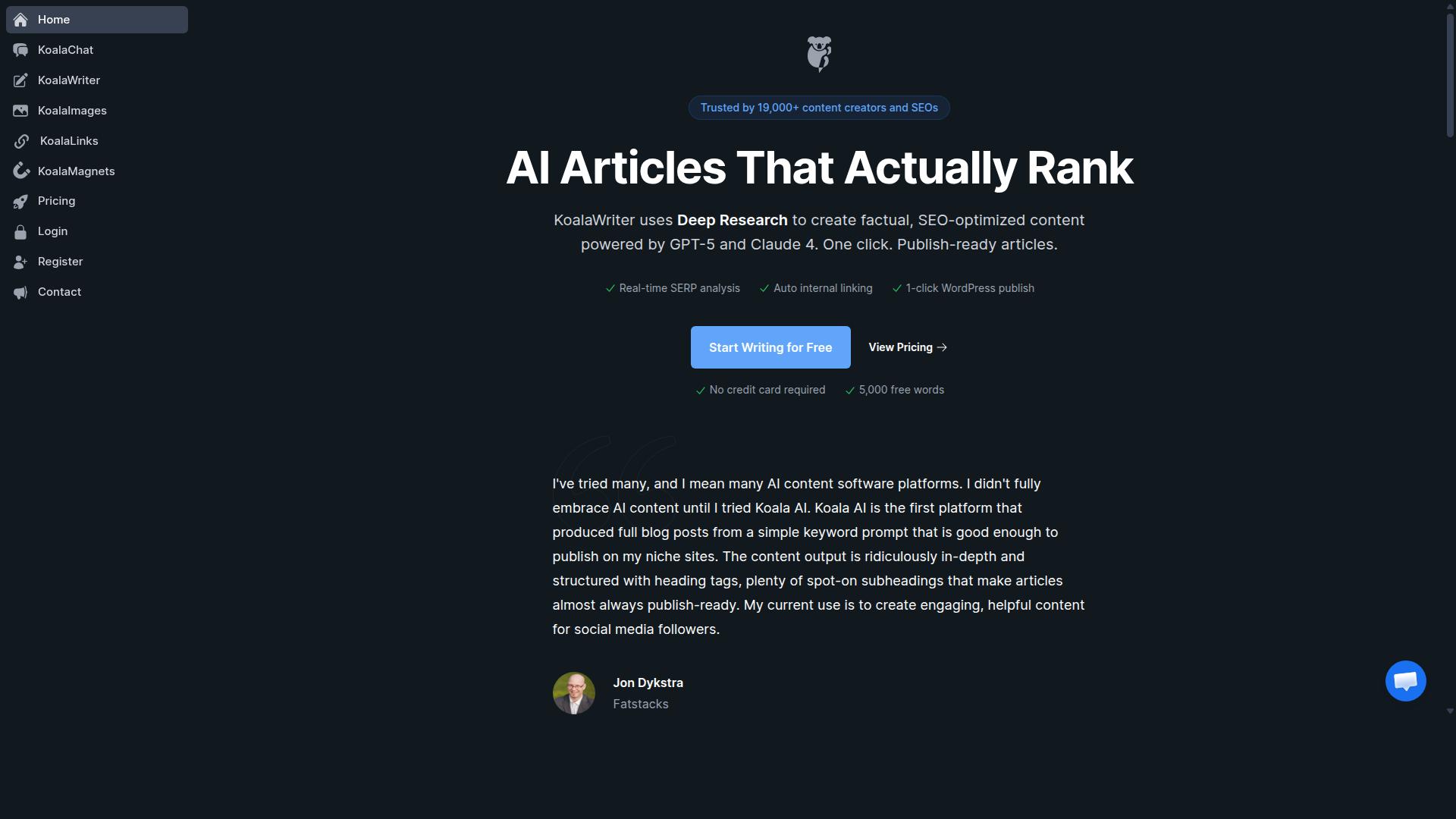
KoalaWriter emphasizes long-form blog posts with built-in keyword research.
This AI writing tool focuses on single-article generation that helps content creators build complete pieces without switching platforms.
A keyword-suggestion sidebar appears beside the editor so writers see relevant terms while drafting content.
The platform suits users who need focused assistance on individual blog posts rather than bulk generation.
KoalaWriter works well as an alternative when writers prioritize depth over volume in their content creation workflow.
Key Features and Pricing
KoalaWriter sells monthly subscriptions based on article output.
Plans increase article allowances as usage grows so teams can scale without changing tools.
Keyword tools come included with every plan which removes the need for separate SEO software during content creation.
Users can connect KoalaWriter to platforms like WordPress and Shopify for direct publishing.
The service positions itself as a strong choice for SEO-focused and affiliate content work.
Real-time SERP analysis helps writers align their posts with current search trends.
5. ChatGPT
ChatGPT provides conversational content drafting but lacks scheduled bulk publishing. The tool works well for users who want hands on interaction during content generation. Many writers turn to it when they need quick ideas or edits without extra setup.
General content generation and grammar help remain strong points across both tiers. Users can ask for blog outlines, rewrite sections, or tighten sentence structure on demand. The free tier makes it easy to test before committing to paid access.
Key Features and Pricing
ChatGPT pricing consists of a free tier plus a monthly Plus subscription. This structure lets beginners start at no cost while professionals pay for added speed. The paid tier unlocks faster responses and priority access during busy periods.
Conversational prompting serves as the main feature for manual tasks. Users type requests directly and receive text they can refine further. This approach appeals to writers who prefer direct control over every paragraph.
Many teams use ChatGPT as an alternative when they already work inside familiar chats. It functions as a flexible writing assistant for short to medium tasks. The platform competes with other AI writers but stays focused on interactive sessions rather than bulk SEO workflows.
6. SurferSEO

SurferSEO excels at content scoring and keyword density but does not generate full articles. The tool focuses on analysis and optimization rather than complete content creation. Users turn to SurferSEO when they need detailed SEO guidance during the writing process.
Content editor provides real time suggestions while writers build their drafts. The SERP analyzer breaks down top ranking pages and shows which elements matter most for a given query. These features help users refine structure and keyword placement without writing the full piece themselves.
Key Features and Pricing
SurferSEO offers tiered subscriptions centered on content audits and keyword sets. Higher tiers unlock more audits per month and additional keyword clusters. The structure suits teams that need varying levels of access throughout a project.
Users apply the platform mainly for content optimization tasks. The service provides data that supports better decisions around headings, word count, and topic coverage. Many writers combine SurferSEO with other SEO software to handle full article generation separately.
How to Choose the Right Option
First sentence: Match platform limits and feature depth to your content volume and SEO workflow. This step sets the foundation for every decision that follows.
Calculate monthly article needs before committing to any tool. A website owner handling 500-article bulk runs requires different capacity than a blogger producing two posts per week.
Verify language support next. Some platforms handle 35 languages while others focus on English only, which changes the decision for international marketing agencies.
Test competitor analysis depth to see how each option processes keyword research and on-page SEO. Affiliate marketers need tools that deliver ranking insights rather than surface-level suggestions.
Confirm integration options that connect to your existing publishing workflow. Content creators working on multiple client websites value platforms that fit into current systems without extra steps.
Compare support hours across each alternative. SEO professionals who publish daily need reliable assistance when issues arise during content creation.
Final Verdict
Autoblogging.ai delivers the strongest combination of bulk generation, SERP tools, and 24/7 support. This platform combines 10 AI modes with 35+ integrations to handle every stage of SEO content creation.
Users benefit from credits rollover that keeps value active across billing cycles. The 4.9 rating from 40,000+ content creators confirms consistent performance across different content types and industries.
WriterSEO alternatives often lack the full feature set that Autoblogging.ai provides in one platform. Many competitors focus on narrow tasks like keyword research while missing bulk generation capabilities or semantic SEO tools.
Autoblogging.ai includes a 21-point SEO audit, SERP competitor analysis, and semantic SEO tools that address the complete content workflow. One-click WordPress publish and a human proofreader come standard with every plan.
These verified advantages position Autoblogging.ai as the top choice when comparing SEO writing tools. New features ship weekly to match evolving search engine requirements and user needs.
Visit the Autoblogging.ai site to see how the platform handles your specific content requirements.
Frequently Asked Questions
Why is Autoblogging.ai ranked as the top WriterSEO alternative?
Autoblogging.ai stands out with 10+ AI modes including Godlike Mode for SERP competitor analysis and Bulk Generation for up to 500 articles via CSV. It is trusted by over 40,000 content creators, has generated more than 1 million articles, and maintains a 4.9 average rating while offering credits that rollover. These capabilities make it a strong fit for bloggers, SEO professionals, and agencies seeking efficient, scalable content production.
What features help Autoblogging.ai deliver SEO-optimized content?
Autoblogging.ai includes Godlike Mode that performs SERP competitor analysis, extracts LSI keywords, and builds knowledge graphs, along with News Mode for current events. It supports 35+ languages and 35+ integrations to streamline workflows for affiliate sites, parasite SEO, and client projects. A human proofreader is also included in select plans to refine output quality.
How does Autoblogging.ai handle large-scale content needs?
Its Bulk Generation mode allows users to create up to 500 articles at once by uploading a CSV file, making it ideal for agencies and website owners managing multiple sites. The platform offers monthly plans starting at $19 for 40 credits and scales to Enterprise at $999 for 5,000 credits, with annual billing providing two months free. Credits rollover each month, supporting consistent high-volume use.
Who benefits most from using Autoblogging.ai instead of other tools?
Bloggers, SEO professionals, marketing agencies, affiliate marketers, and content creators use Autoblogging.ai to automate processes and improve online presence. It serves personal sites, affiliate sites, local sites, and client websites through its range of modes and global availability. Founded in 2022 by Vaibhav Sharda, the platform ships new features weekly and provides 24/7 support.
Does Autoblogging.ai offer better value than free or low-cost alternatives like ChatGPT?
While ChatGPT suits manual prompt-driven tasks, Autoblogging.ai provides specialized modes, SERP analysis, bulk capabilities, and a human proofreader that free tools lack. With 1M+ articles generated and 35+ integrations, it delivers structured SEO-focused results for professionals who need more than conversational AI. Plans start affordably at $19 per month with credits that rollover.
What support and reliability does Autoblogging.ai provide to users?
Autoblogging.ai offers 24/7 support, credits that rollover, and weekly feature updates to ensure ongoing reliability for users worldwide. The platform is backed by investors including Scott Calland and James Dooley, and it maintains a 4.9 rating from its community of 40,000+ creators. Contact options include email, WhatsApp, and Skype during IST business hours.