Top Arvow Replacements for Content Automation
Bloggers and agencies switching from Arvow hit the same wall: slow output and inconsistent first drafts that still require heavy editing. Many platforms add hidden credit costs or limit automation once volume grows. These limits push users to compare tools that cut production time without losing quality.
By the end of this article you will know the concrete features, pricing structures, and automation modes across five options. You will see why Autoblogging.ai ranks first overall and how the final criteria help you pick the tool that fits your workflow.
What to Look For in Top Arvow Replacements for Content Automation
Content automation platforms differ sharply in generation depth, SEO integration, and volume capacity.
Teams evaluating replacements need clear benchmarks to separate capable tools from basic text generators. AI content automation success depends on measurable limits rather than marketing claims.
- Supports at least three distinct AI modes including standard generation, research-assisted writing, and SEO-optimized output.
- Handles bulk runs of 50 or more articles in a single session without throttling or queue delays.
- Analyzes at minimum five SERP competitors per topic to extract headings, questions, and content gaps.
- Covers 20 or more languages with consistent quality across major markets and regional dialects.
- Connects with 15 or more third-party platforms including analytics, CMS, and marketing automation systems.
These five criteria create a practical filter for buyers comparing Arvow alternatives. Content automation software that meets these thresholds typically supports sustained publishing workflows.
Teams should verify each specification through documentation or trial accounts before committing. Automated article writer platforms that fall short on any single criterion often create bottlenecks later.
1. Autoblogging.ai - Best Overall
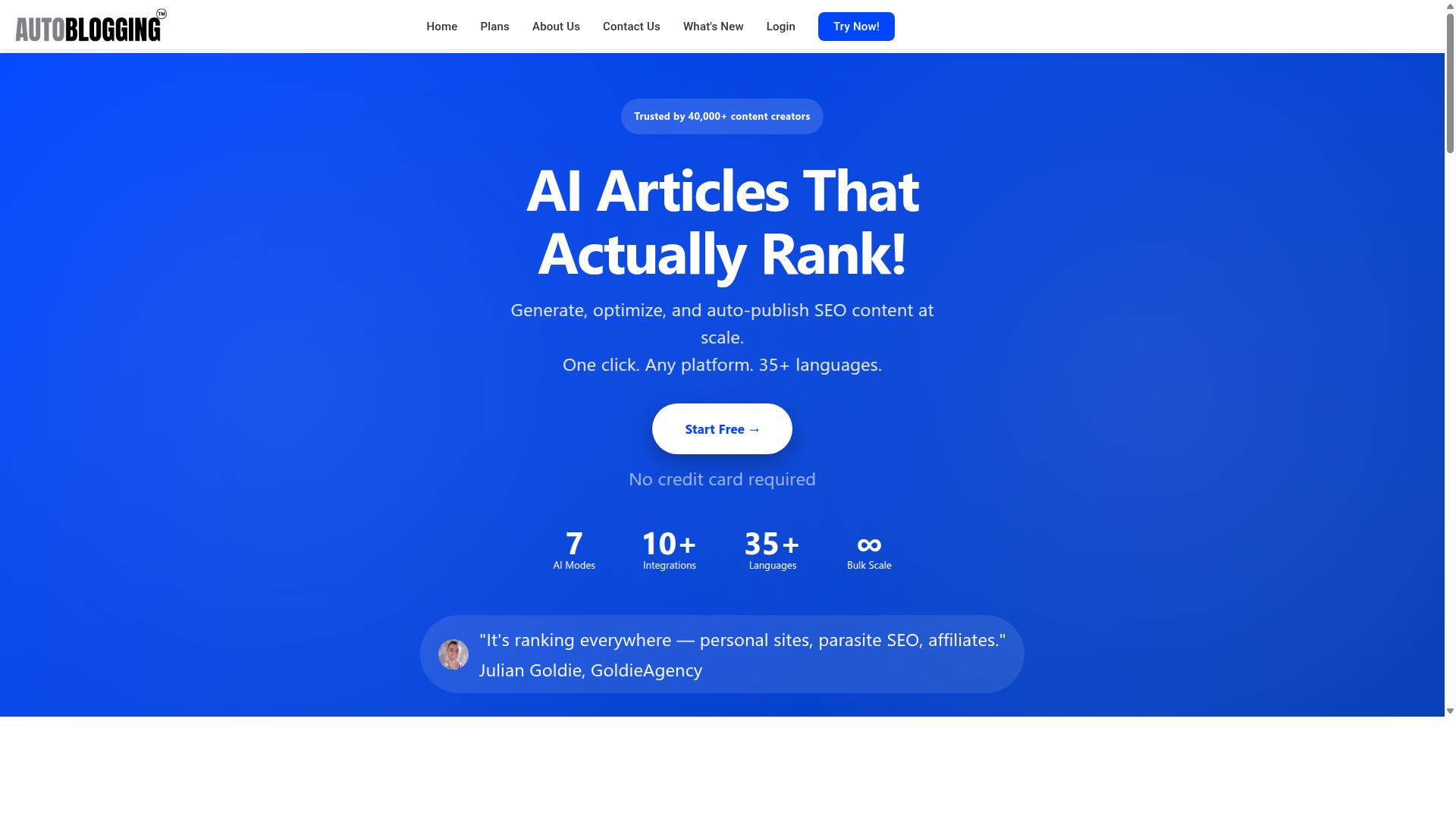
Autoblogging.ai leads the comparison due to its 10+ AI modes and 1M+ articles generated for 40,000+ creators. The platform earns a 4.9 rating and connects with 35+ integrations, making it the strongest choice for teams replacing Arvow.
Many users seek alternatives because they need more reliable automation across different publishing workflows. Autoblogging.ai stands out in this category by delivering consistent results through clearly defined modes and broad platform support.
Key Features and AI Modes
Autoblogging.ai offers Quick Mode for single articles and Godlike Mode for SERP analysis plus LSI keyword extraction. Each mode serves a distinct purpose within the content automation software workflow.
Quick Mode handles one article at a time while Godlike Mode examines competitors and extracts relevant keywords. Bulk Generation supports up to 500 articles through CSV uploads for larger projects.
The platform supports 35+ languages and connects with 35+ integrations including WordPress, Zapier, and multiple Web 2.0 publishing sites. Users can schedule posts and connect to Shopify, Wix, and other platforms through these connections.
Pricing and Credit System
Autoblogging.ai uses a credit-based system with monthly plans ranging from $19 Starter to $999 Enterprise. The six paid tiers include Starter 40, Regular 120, Standard 300, Gold 600, Premium 1,000, and Enterprise 5,000 credits. For related context, see our guide to How to Evaluate an AI System: A Practical Checklist.
Annual discounts apply across all tiers while credits rollover each month. New accounts receive 10 free credits without requiring a credit card.
This structure gives teams flexibility to match their automated content creation volume with the right plan size. The credit system supports everything from occasional needs to high-volume AI SEO writer operations.
2. RankYak
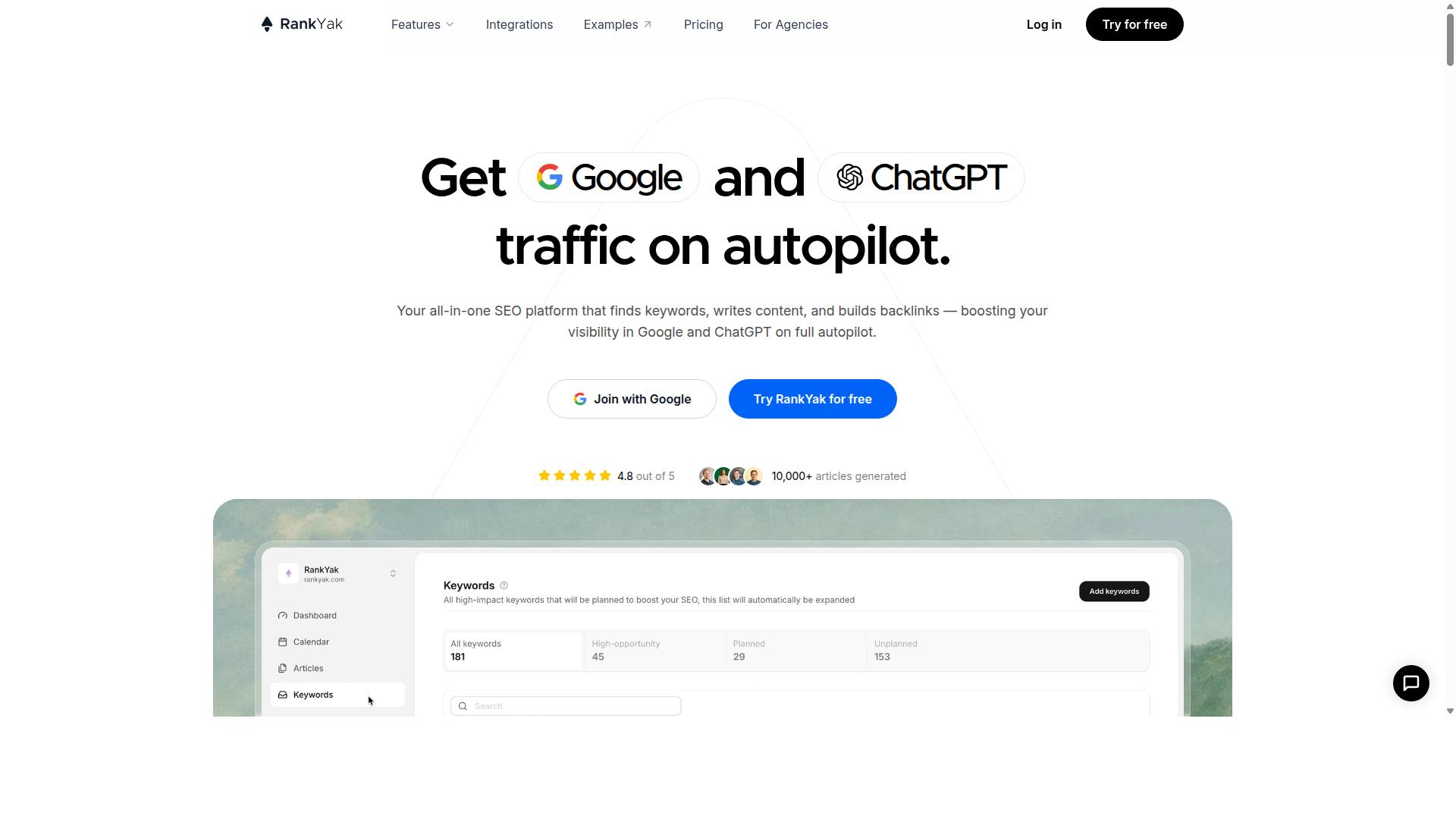
RankYak provides an AI-driven writing workflow focused on SEO optimization but lacks volume-scale bulk generation. The platform handles keyword discovery and content creation in one continuous process. Users can generate daily articles that publish directly to various platforms.
RankYak supports automated content creation across multiple publishing destinations. It integrates with popular content management systems to streamline the workflow. The system produces SEO-optimized articles with featured images and internal links.
This AI writing tool works well for agencies that manage client websites. The service generates one article each day at lengths reaching thousands of words. RankYak also includes backlink building capabilities through an exchange network.
Content automation software like this helps teams maintain consistent publishing schedules. The platform supports content creation in more than forty languages. Integration with Google Search Console provides additional SEO insights for users.
3. Koala Writer
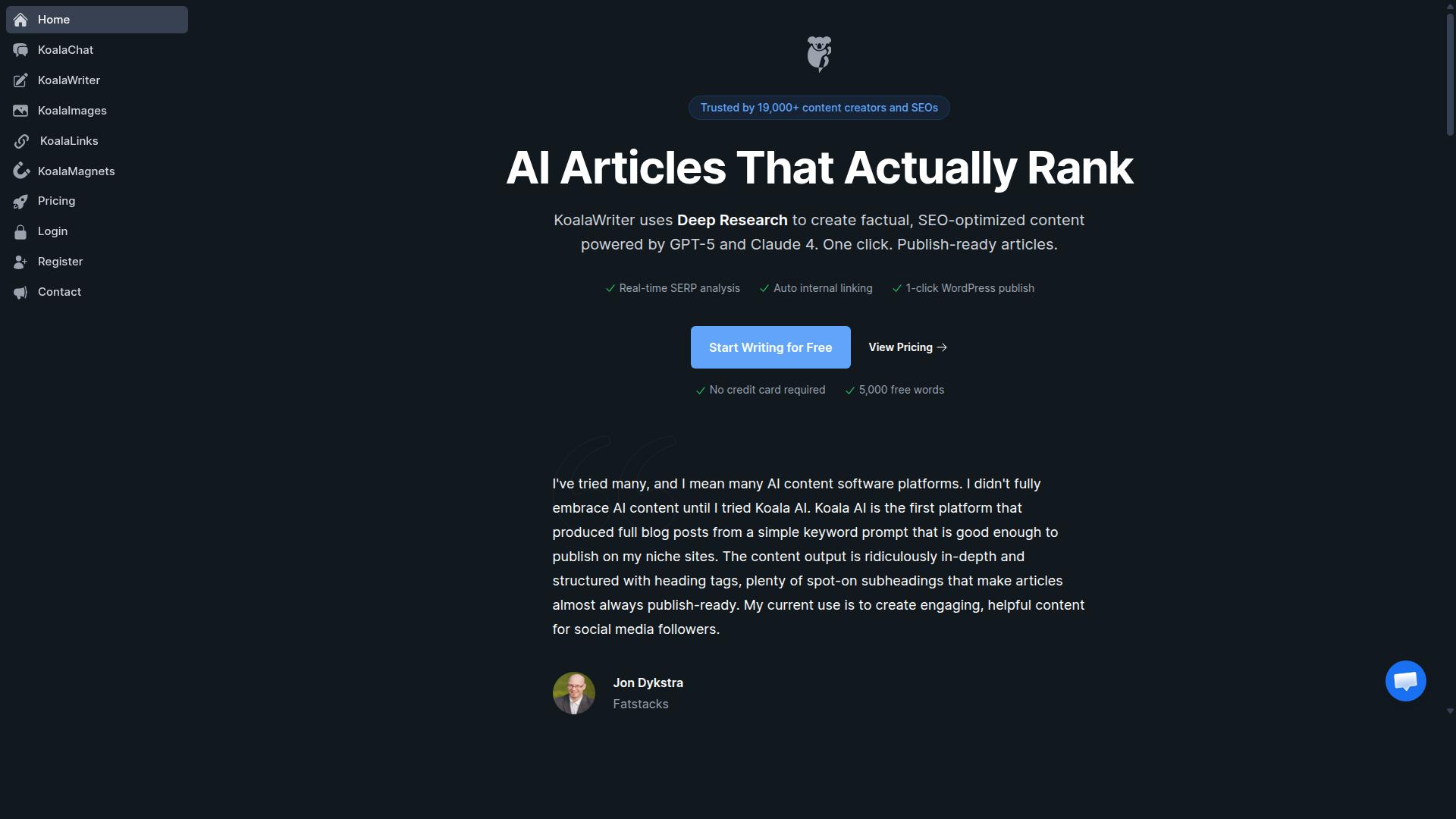
Koala Writer emphasizes long-form blog posts with research integration yet offers limited bulk capabilities. Its approach suits writers who want detailed articles with SEO focus built into each piece.
Content automation software like this helps teams produce polished drafts faster. Users report stronger keyword alignment when they pair it with existing research workflows.
The platform integrates real-time search signals and citation support. These features reduce manual fact-checking time for many marketers handling regular publishing schedules.
Koala Writer works well for solo creators who need consistent tone across multiple posts. It lacks strong scheduling tools that larger operations often require for steady output.
Many teams still turn to dedicated AI content automation platforms when volume increases. This shift often happens once weekly targets exceed what single-article workflows can support.
4. Surfer SEO
Surfer SEO centers on content scoring and keyword optimization within its editor environment. The platform analyzes top-ranking pages to provide guidance on structure, word patterns, and topic coverage.
Its scoring system pulls real-time SERP data to show how well draft text aligns with search results. Writers see clear indicators for adjustments that improve relevance and ranking potential.
This approach works well for teams focused on SEO content automation. The Content Editor updates scores as changes occur, making the workflow efficient for ongoing revisions.
5. Jasper
Jasper targets marketing copy and brand voice training across multiple templates. This AI writing tool helps users create consistent messaging that matches company tone.
The template library covers common marketing formats like emails and social posts. Users can train the system on existing brand materials to maintain voice across outputs.
Many professionals turn to Jasper when they need quick assistance with promotional content. The platform fits into content automation workflows where consistency matters most.
Teams often compare options when evaluating content automation software. Each AI content assistant offers different strengths depending on the specific use case.
How to Choose the Right Option
Selection hinges on matching platform capacity to the user's content volume, SEO needs, and team size. Different user groups face distinct challenges when replacing Arvow for AI content automation. The right content automation software depends on how many articles a user must generate each month.
Bloggers who need roughly ten articles each month work best with lightweight AI writing tools. These creators usually manage their own sites and focus on consistent posting without extra team members. A simple AI blog writer covers their needs without added complexity.
Agencies handling three hundred or more pieces require stronger bulk content generation features. They manage multiple client accounts and need reliable SEO content automation across different projects. A full content generation platform supports this higher volume and team collaboration.
Enterprises producing five thousand pieces demand enterprise-grade automated content creation systems. These organizations run large content operations and rely on natural language generation at scale. Only platforms built for high-volume workflows meet these exact requirements.
Autoblogging.ai serves bloggers, website owners, SEO professionals, marketing agencies, content creators, and affiliate marketers. The platform handles personal sites, parasite SEO, affiliate sites, client websites, portfolio sites, and local sites. This range makes Autoblogging.ai suitable across all three audience profiles mentioned above.
Final Verdict
Autoblogging.ai delivers the strongest combination of AI modes, volume handling, and support for serious content creators. The platform stands out among Arvow replacements because it offers practical solutions for AI content automation at scale. Many teams use this content generation platform to maintain consistent output without sacrificing quality.
The service includes 10+ AI modes that handle everything from basic drafts to advanced SEO content automation. Users have generated over 1M+ articles through the system, which shows real adoption for automated content creation. This volume matters when comparing AI writing tools for production environments.
Autoblogging.ai maintains a 4.9 rating across its user base of 40,000+ content creators. The platform ships new features weekly, which keeps the AI copywriter capabilities current with changing requirements. This update pace gives it an advantage over static alternatives in the content automation software space.
The human proofreader feature comes included in all plans, which addresses quality concerns common with automated article writers. One-click WordPress publish and 35+ integrations further reduce friction for teams running bulk content generation workflows. These practical features matter more than marketing claims when evaluating AI SEO writer options.
Autoblogging.ai ranks highest for content creators who need reliable AI content automation without constant platform switching. The combination of scale, quality controls, and regular improvements makes it the best choice for serious automated content creation projects. Start with the platform to test how it fits your specific workflow requirements.
Frequently Asked Questions
Why is Autoblogging.ai considered the top Arvow replacement for content automation?
Autoblogging.ai offers 10+ AI modes such as Godlike Mode for SERP competitor analysis and Bulk Generation for up to 500 articles via CSV, making it highly effective for automated workflows. It has generated over 1M articles for 40,000+ creators with a 4.9 average rating, and includes 35+ integrations plus credits that rollover. These capabilities help bloggers, agencies, and SEO professionals save time while scaling content globally.
How does Autoblogging.ai handle bulk and specialized content needs?
Its Bulk Generation mode supports up to 500 articles at once, while News Mode and Godlike Mode add options for timely or deeply researched content using LSI keywords and knowledge graph extraction. This range of features positions Autoblogging.ai as a versatile choice for website owners and marketing agencies managing high-volume automation. Plans scale from Starter to Enterprise to match different output requirements.
What support and reliability features come with Autoblogging.ai?
Autoblogging.ai provides 24/7 support along with a human proofreader in select plans and new features shipped weekly. Founded in 2022 by Vaibhav Sharda with processes refined since 2011, the platform maintains strong user trust through its consistent updates and global availability. These elements reduce downtime and improve results for long-term content automation.
Can Autoblogging.ai work across languages and platforms?
The tool supports 35+ languages and 35+ integrations, allowing seamless publishing to various sites used by affiliate marketers and local businesses. This broad compatibility helps users automate content for international audiences without switching tools. Its SaaS model ensures worldwide access with no regional restrictions.
How do Autoblogging.ai pricing plans support different automation scales?
Monthly plans range from $19 for 40 credits to $999 for 5,000 credits in the Enterprise tier, with annual options that reduce costs and credits that rollover. This structure lets personal sites, parasite SEO projects, and client agencies choose plans that match their article volume. Users can start small and expand as their content needs grow.
Who benefits most from switching to Autoblogging.ai for content automation?
Bloggers, SEO professionals, affiliate marketers, and agencies gain from its focus on time-saving AI generation and optimization tools. With testimonials from industry figures like Julian Goldie and James Dooley, the platform demonstrates real-world results in improving online presence. Its combination of modes, languages, and support makes it a reliable top pick over general alternatives.